The Verdict Framework — How We Scored Each Sleep Intervention
What ‘worth it’ means in this context: effect size, cost, accessibility, and evidence tier
You’re doing everything right — 10pm bedtime, no screens, magnesium before bed — and you still wake up at 3am feeling like you’ve been hit by a bus. The sleep optimisation industry is worth billions, but most of what it sells you is noise. Here’s what the evidence actually supports.
Before we get to the product verdicts, it matters that you understand how they were scored. Four criteria: how large is the actual effect on sleep quality, what does it cost, can you realistically use it, and how strong is the evidence behind it. A supplement with three small studies and a glossy marketing budget scores differently from a free behavioural intervention backed by decades of circadian biology research. That distinction is the whole point of this article.
Why the 7-9 hour floor matters before any optimisation talk begins
Here is the uncomfortable truth about sleep optimisation: if you are not getting seven hours, none of the gadgets matter. Research from Oregon Health and Science University, analysing sleep duration and life expectancy data from more than 3,000 US counties, found that regularly getting too little sleep is directly linked to a shorter lifespan. Not associated. Linked. Sleeping fewer than seven hours consistently is associated with a measurably reduced life expectancy, with the seven-to-nine hour range identified as the evidence-supported sweet spot.
Some research models now rank sleep duration as a stronger longevity predictor than diet or exercise. If you are a person who optimises your nutrition and trains regularly but caps sleep at six hours because of work, you are pulling hard against yourself. Duration is the foundation. Everything else in this article sits on top of it.
The Free Stuff First — Zero-Cost Interventions With Strong Evidence
Light management — morning sunlight and evening darkness as your master sleep switch
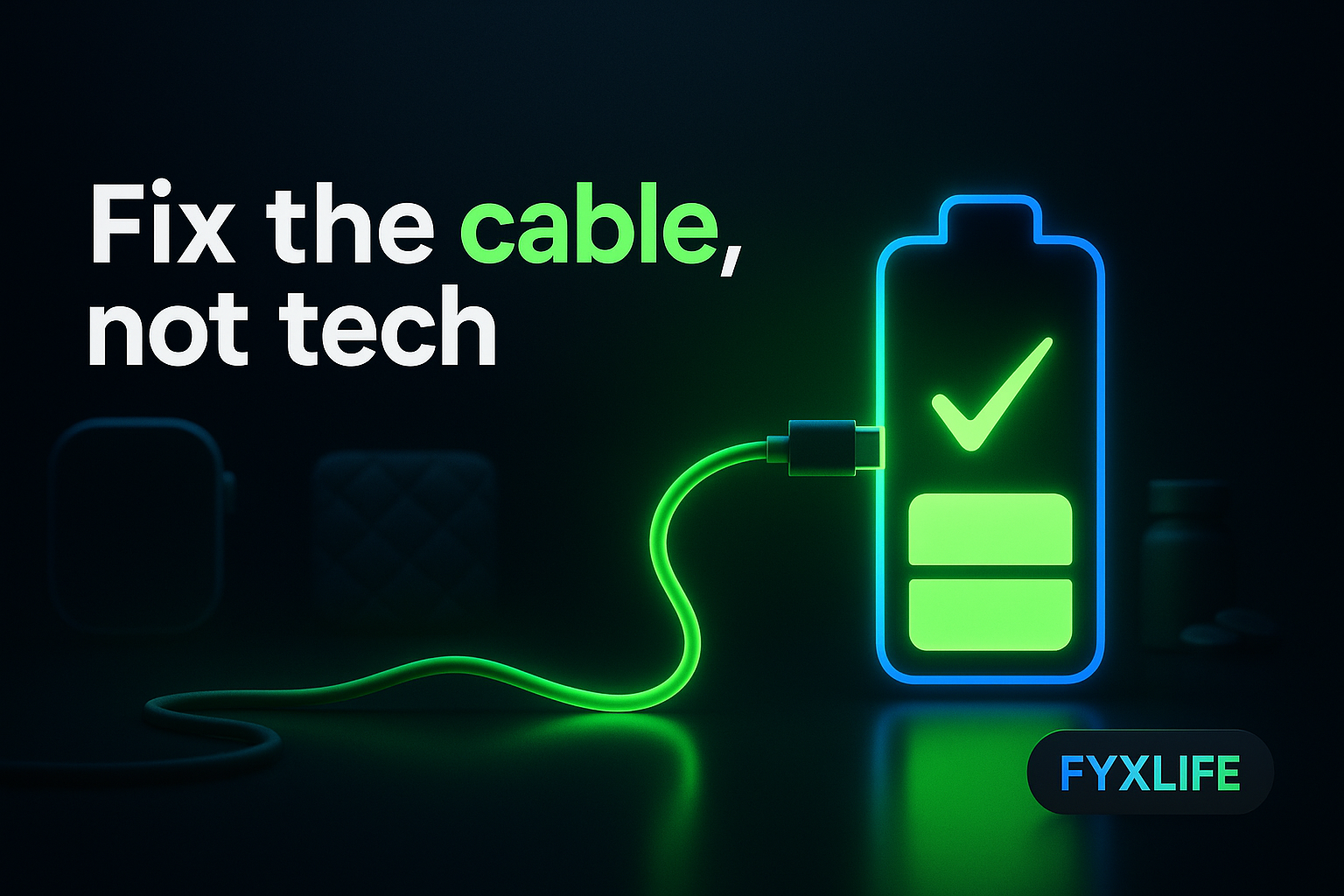
Think of your sleep system like a smartphone battery with a faulty charging cable. You can buy the most expensive wireless charger on the market, but if the cable — your light environment, your body’s stress hormone rhythm, your consistent bedtime — is broken, the battery will never reach 100%. Most sleep tech is a fancier charger. Fixing the cable is free and works better.
Light is the cable. Specifically, light exposure is what sets your body clock — the internal timing mechanism that science calls your circadian rhythm — which in turn controls when your brain releases the hormone that triggers sleep onset (melatonin), when your core body temperature drops, and when you begin cycling through the deep restorative stages of sleep. Modern light exposure has been identified as a key disruptor of metabolism, hormones, energy, and long-term health — and the fix costs nothing.
Get outdoor light within thirty to sixty minutes of waking. Even on a cloudy day in Singapore, outdoor light is ten to fifty times brighter than your office or home — enough to anchor your body clock for the day. In the evening, dim your overhead lighting and remove screen exposure for at least sixty minutes before bed. This is not a wellness suggestion. It is applied circadian biology. Nothing in the paid category comes close to its effect size.
Consistent sleep and wake times — the unsexy intervention that outperforms most supplements
Your body does not care that you slept late on Saturday. It runs on regularity. Irregular sleep and wake times cause what researchers call social jetlag — a chronic misalignment between your biological clock and the clock on your wall — which disrupts sleep architecture even when total hours look adequate. The fix is a consistent wake time, seven days a week, held even after a bad night. Not because it feels good in the short term, but because it anchors the entire system.
Research suggests that small, consistent improvements in sleep — not dramatic overhauls — may significantly extend lifespan when combined with modest improvements in nutrition and exercise. This is the intervention most people skip because it requires no purchase and no novelty. It is also the one most likely to compound.
Temperature, noise, and the sleep environment: what actually moves the needle
Core body temperature needs to drop by roughly one degree Celsius to initiate sleep. In Singapore’s heat, this is a genuine obstacle. A cool room — ideally between 18 and 21 degrees Celsius — supports that drop. If running the air conditioning all night is costly, consider cooling the bed rather than the room, or taking a warm shower before bed. The paradox is real: a warm shower drives blood to the skin’s surface, dissipates heat, and accelerates the drop in core temperature that your body needs.
On noise: consistent background sound — a fan, brown noise, or a white noise machine — does not improve sleep directly. What it does is mask the irregular sounds that fragment it. For light sleepers or those in urban environments, this is a legitimate low-cost intervention. Earplugs work equally well and cost less than any app.
Supplements — What the Evidence Actually Says
Magnesium glycinate — the most evidence-supported supplement for sleep quality
Magnesium glycinate — magnesium bound to the amino acid glycine for superior absorption compared to cheaper forms — has the strongest evidence base of any sleep supplement currently available without a prescription. Magnesium supports the activity of GABA, the brain’s primary calming neurotransmitter, and helps regulate the nervous system’s transition from alert to restful states. Many adults are mildly deficient without knowing it, particularly those under chronic stress or who train regularly, as both deplete magnesium stores.
The evidence supports 200 to 400mg taken thirty to sixty minutes before bed. The specific form matters: magnesium oxide, the cheapest and most common form in supermarket supplements, has poor absorption and is largely useless for sleep purposes. Glycinate or threonate are the forms the research used. Ranking sleep-related supplements by scientific evidence, magnesium consistently places at the top of the evidence-supported category. Verdict: worth it.
Melatonin — useful tool, widely misused (dose and timing matter enormously)
Melatonin is not a sleeping pill. It is a timing signal — a hormone your brain produces naturally as darkness falls, telling your body clock that night has arrived. Using it to knock yourself unconscious at a high dose is a misunderstanding of what it does. The evidence-supported dose for sleep onset is 0.5mg to 1mg, taken sixty to ninety minutes before your target sleep time. Most commercial melatonin products in Singapore and globally are sold at 5mg to 10mg — five to twenty times the dose that research supports — which can suppress your natural production over time.
Where melatonin genuinely earns its place: jet lag, shift work, and resetting a drifted sleep schedule. For these specific use cases, the evidence is solid. As a nightly supplement for garden-variety poor sleep, it addresses the symptom rather than the signal. If you need melatonin every night to fall asleep, the question worth asking is why your natural production is insufficient — and that question usually leads back to light exposure.
Ashwagandha, L-theanine, and the rest — where the evidence gets thin
L-theanine — an amino acid found naturally in green tea — has modest evidence for reducing the time it takes to fall asleep and for improving subjective sleep quality, particularly when combined with stress-driven wakefulness. The effect size is small but the risk is essentially zero and the cost is low. Reasonable to try. Ashwagandha (an adaptogenic herb used in Ayurvedic medicine) has some emerging evidence for reducing cortisol — the body’s primary stress hormone — which may support sleep indirectly, but the sleep-specific data is preliminary. The rest of the supplement shelf — valerian, passionflower, GABA capsules, and the various “sleep blend” products — has evidence too thin to recommend confidently. Low risk, but also low return.
Sleep Trackers — Do They Help or Just Stress You Out?
What consumer wearables can and cannot accurately measure
Consumer sleep trackers — the Oura Ring, the Whoop, the Apple Watch, the Garmin — measure movement and heart rate variability (the variation in time between heartbeats, which reflects nervous system recovery) and use algorithms to infer sleep stages. They are reasonably good at detecting total sleep duration and distinguishing sleep from wakefulness. They are considerably less accurate at identifying specific sleep stages — particularly the difference between light sleep and deep slow-wave sleep — compared to the clinical gold standard, a full overnight brain wave recording called a polysomnography (PSG). This does not make them useless. It means you should use them as trend tools, not diagnostic instruments.
Orthosomnia: when tracking your sleep makes your sleep worse
There is a documented phenomenon — researchers call it orthosomnia, an unhealthy preoccupation with achieving perfect sleep metrics — where people become so focused on their tracker score that the anxiety itself disrupts the sleep they are trying to improve. If you wake up and the first thing you do is check your sleep score, and a bad score affects your mood or energy expectations for the day, the tracker is no longer a tool. It has become a source of stress. That is a net negative, regardless of how accurate the readings are.
Verdict: who benefits from a tracker and who should ignore their sleep score
Trackers are genuinely useful for people who are unaware of their patterns — those who believe they are sleeping well but feel chronically unrestored, or those making changes and wanting to see whether anything is shifting. They are counterproductive for people with existing sleep anxiety or anyone who notices that checking their score has become an emotionally charged act. If you already know you wake at 3am and feel terrible, a device confirming this adds nothing except a subscription fee.
The Interventions That Are Pure Hype
‘Sleep less, feel better’ biohacking claims — why they contradict population-level longevity data
A persistent strain of productivity culture claims that certain individuals — so-called “short sleepers” — genuinely thrive on five or six hours and that sleep can be hacked into higher efficiency through polyphasic schedules or cold exposure. The population-level data is unambiguous in contradicting this for the vast majority of people. The Oregon Health and Science University analysis of more than 3,000 counties found that regularly getting too little sleep is consistently linked to a shorter lifespan. The rare genetic variant that permits genuine short sleep affects an estimated one to three percent of the population. The other ninety-seven percent who claim they are fine on six hours are, in the research literature, chronically sleep-deprived people who have adapted to the feeling of deprivation — not people who have optimised their sleep biology.
Expensive gadgets with no clinical evidence: chillers, EMF blockers, and premium sleep sprays
Bed cooling systems that circulate chilled water through a mattress pad can cost upwards of SGD 1,500. The underlying mechanism — cooling the sleep surface to lower core body temperature — is biologically sound. But a SGD 15 fan and a cooler thermostat achieve the same mechanism for a fraction of the cost. EMF-blocking sleep devices, grounding mats, and “biofrequency” sleep patches have no credible clinical evidence. Premium aromatherapy sleep sprays with lavender and chamomile have some very limited relaxation data but no meaningful effect on sleep architecture. These are not dangerous. They are just expensive placebos in a category where the free interventions outperform them.
The SuperDoc Sleep Verdict — Ranked From Worth It to Skip It
Worth It (free or low cost, strong evidence)
Consistent wake time seven days a week. Morning light exposure within sixty minutes of waking. Evening light reduction for sixty minutes before bed. A cool sleep environment. Magnesium glycinate 200 to 400mg before bed. These interventions have the strongest evidence base, the lowest cost, and the most direct effect on the mechanisms that govern sleep quality. Leading neurosurgeon Dr. Joseph Maroon describes quality sleep as a “cornerstone of brain health and longevity” — and every intervention in this tier supports that directly.
Worth Trying (moderate evidence, low risk, low cost)
L-theanine for stress-driven sleep disruption. Low-dose melatonin (0.5 to 1mg) for jet lag or schedule resetting. White noise or a fan for masking environmental noise. A warm shower thirty to sixty minutes before bed to accelerate core temperature drop. These are not transformative, but the evidence is reasonable and the cost is low enough that the risk-reward calculation is clear.
Investigate Further (promising but expensive or early-stage evidence)
Consumer sleep trackers — genuinely useful for pattern awareness if you can avoid the orthosomnia trap. Ashwagandha for cortisol-driven wakefulness — the mechanism is plausible, the evidence is early but growing. Bed cooling systems — the biology is right, the price premium is hard to justify when cheaper alternatives exist. Collective small steps to improve sleep alongside diet and exercise are linked to better health outcomes and a longer life — and this tier is where incremental investigation makes sense once the free foundations are solid.
Skip It (hype outpaces the science)
EMF-blocking devices. Grounding mats. Premium sleep sprays. High-dose melatonin taken nightly. Polyphasic sleep schedules. Any device or supplement claiming to replace duration with efficiency. Even one week of mild sleep disruption measurably throws off hunger hormones and blood sugar regulation — making poor sleep a genuine metabolic problem that no spray or frequency device comes close to addressing. Quality sleep supports healthy ageing, longevity, and physical recovery in ways that make it a pillar of long-term wellness — not a problem to be hacked with expensive peripherals.
One Action to Take This Week
Based on this verdict, make one decision this week: audit your light environment before spending another dollar on sleep tech. For three consecutive nights, dim all overhead lights and avoid screens for 60 minutes before your target bedtime — no app, no supplement, no device required. If your sleep quality or morning energy improves measurably, you have confirmed that your cable was broken, not your charger. Only then decide whether any paid intervention is worth investigating further.