
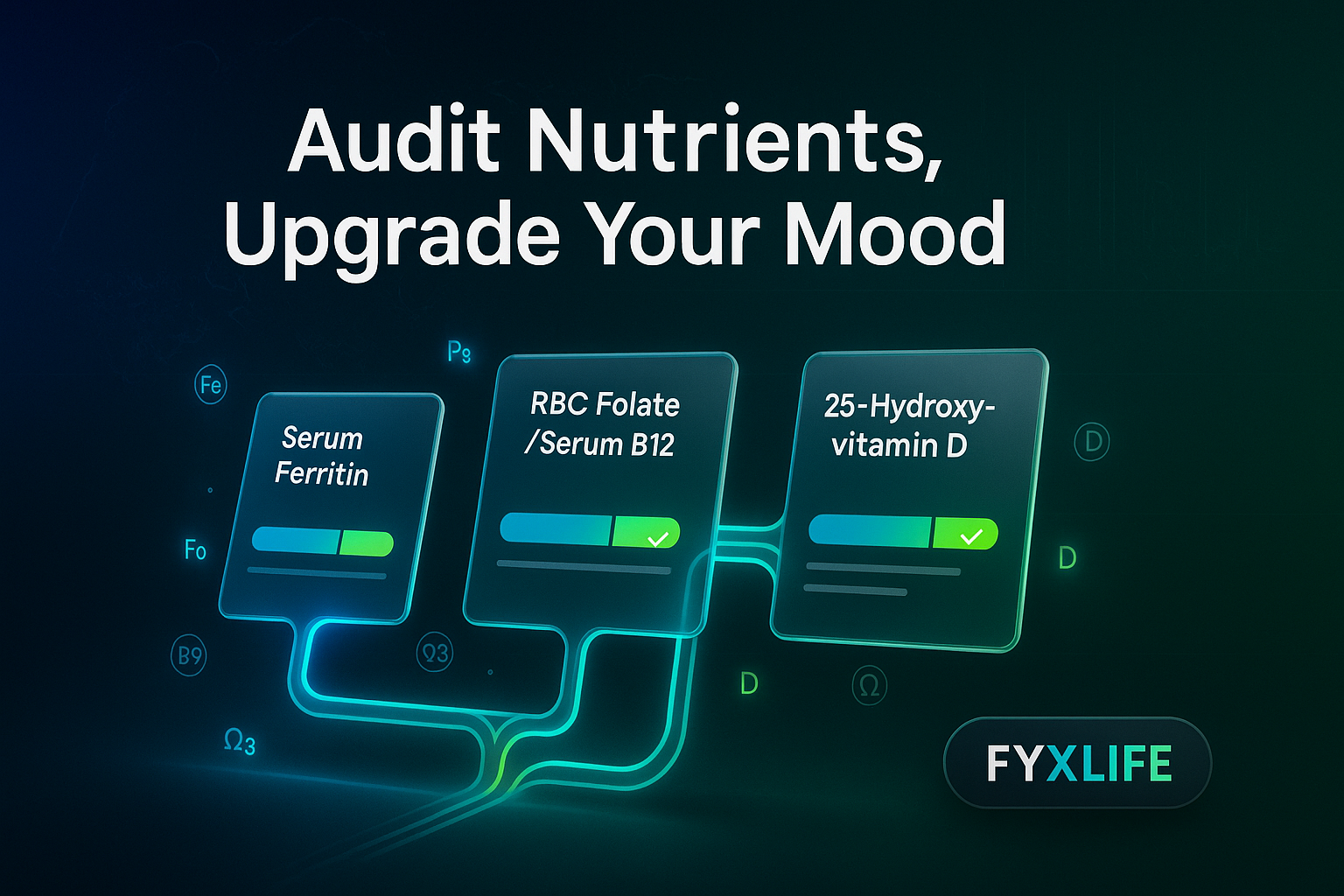
You’ve cleaned up your diet, cut the sugar, added the greens — yet the brain fog, low mood, or anxiety won’t budge. The missing piece isn’t more willpower: it’s data. Specific nutrient biomarkers can reveal exactly where your diet is failing your brain, and most Singaporeans in their 40s and 50s have never tested a single one.
This isn’t a minor oversight. You might be eating well by every reasonable measure — more vegetables, less processed food, decent protein — and still running on a supply chain with critical gaps. The frustration of doing the right things and still feeling mentally flat is real, and it has a biological explanation. What it usually doesn’t have is a number attached to it.
Why Your Annual Blood Test Is Missing the Brain-Nutrition Picture
A standard annual health screening in Singapore is designed to catch acute problems: dangerously high cholesterol, uncontrolled blood sugar, anaemia severe enough to require treatment. It was never designed to answer the more nuanced question you’re actually asking: why does my brain not work as well as it should?
The bidirectional trap — when low mood depletes nutrients that worsen low mood
The relationship between nutrition and mental health runs in both directions: the foods you eat shape your mental state, and your mental state shapes what and how you eat. This creates a trap that’s remarkably easy to fall into. Low mood blunts appetite and narrows food variety. Narrowed food variety depletes the specific micronutrients that support mood regulation. Depleted micronutrients worsen the low mood. The cycle reinforces itself, and the entry point — which came first, the nutritional gap or the mood shift — is impossible to identify without testing.
Understanding this bidirectional mechanism matters because it changes what you’re testing for. You’re not just checking whether your diet has been good enough. You’re auditing a feedback loop that may have been running for months or years without your awareness.
Why standard panels skip the markers your brain actually runs on
Think of your brain as a factory that runs on very specific raw materials. You can put in long hours — good sleep, regular exercise, stress management — but if the supply chain is broken, with not enough iron, folate, zinc, or omega-3s arriving from your diet, the production line slows down regardless. Testing your nutritional biomarkers is like auditing the supply chain rather than blaming the factory workers. You find out exactly which materials are missing, restock them, and retest to confirm the line is running again.
The reason standard panels skip these markers isn’t malice or incompetence. It’s efficiency. A GP operating within a 10-minute appointment and a cost-conscious health system defaults to the tests that catch the most common acute conditions. Population-level reference ranges were built on large datasets that define “normal” as the middle 95% of people tested — not “optimal for cognitive function in a 47-year-old who has been fatigued for six months.” That distinction is real, and it’s rarely explained unprompted.
The Core Panel — 6 Biomarkers That Connect Your Diet to Your Mental Health
Several micronutrients — specifically iron, zinc, and folate — have documented research associations with mental health status, making them priority targets in any nutrition-mental health workup. But the full picture is broader than those three. Here is what a meaningful baseline panel looks like, and why each marker earns its place.
Iron and ferritin — the energy and mood mineral most adults in Singapore under-test
Serum ferritin is the stored form of iron in your body — think of it as the iron reserve sitting in the warehouse, not just what’s actively circulating. Full blood count is the standard test, but it catches anaemia only when things have already gone badly wrong. Ferritin can sit depleted for months — producing fatigue, poor concentration, and low mood — while your haemoglobin looks perfectly normal. Request ferritin specifically. For brain function, a result below 50 mcg/L is worth taking seriously even if it falls within the reference range your lab prints on the report.
Folate and B12 — the methylation pair that regulates neurotransmitter production
Folate and vitamin B12 work as a pair in a biochemical process called methylation — the series of chemical reactions your body uses to produce serotonin, dopamine, and other chemical messengers in the brain (the technical term for these is neurotransmitters). When either is low, the whole process slows. Request RBC folate (the folate stored inside red blood cells) rather than serum folate, which fluctuates based on what you ate in the last few days and is a far less reliable measure. For B12, serum B12 is the standard test, though some practitioners also run homocysteine — an amino acid that rises when both folate and B12 are insufficient — as a more sensitive functional marker.
Zinc — the overlooked mineral linked to anxiety and cognitive function
Serum zinc is chronically under-tested in routine panels. Zinc plays a direct role in how your brain regulates glutamate and GABA — the main excitatory and calming chemical signals in your nervous system. Low zinc is associated with increased anxiety, impaired memory, and cognitive slowing. It’s also depleted by high stress, heavy exercise, and diets low in animal protein — a combination common in the 35-60 age group in Singapore. Testing it takes one blood draw and costs very little. Its absence from standard panels is hard to justify.
Vitamin D — the marker most Southeast Asians assume they don’t need
The assumption that living near the equator means you can’t be vitamin D deficient is one of the more persistent myths in regional health. 25-hydroxyvitamin D — the blood marker for vitamin D status — is frequently low in urban Singaporeans because sun avoidance, indoor work, and SPF use drastically reduce skin synthesis. Vitamin D receptors exist throughout the brain. Low levels are associated with depression, cognitive decline, and fatigue in ways that look remarkably similar to other nutritional deficiencies. A result below 50 nmol/L warrants attention, even if your lab’s reference range starts at 30.
Omega-3 index — how to measure whether your brain is getting adequate healthy fats
Your brain is roughly 60% fat by dry weight, and the particular fats that matter most for mental health are the long-chain omega-3 fatty acids EPA and DHA. The omega-3 index measures the percentage of these fats in your red blood cell membranes — a far more accurate reflection of your actual tissue levels than asking “do you eat fish twice a week?” An index below 4% is associated with increased depression risk and cognitive impairment. The target range for brain health is generally considered to be above 8%. This test is not yet standard in most Singapore clinics, but it is available and worth specifically requesting if mood and cognition are your concern.
hsCRP — your inflammation signal, the gut-brain link made measurable
High-sensitivity C-reactive protein (hsCRP) is a measure of low-grade inflammation — a slow-burning fire in the body (what researchers call systemic inflammation) that has been consistently linked to depression and cognitive decline. Most standard panels run CRP at lower sensitivity, missing the low-grade elevations that matter most for brain health. Request hsCRP specifically. A result above 1 mg/L in the absence of an acute infection is worth investigating. Above 3 mg/L is a signal that something — gut health, diet quality, metabolic stress — needs attention.
The Gut-Brain Extension Panel — When to Go Deeper
What gut health markers tell you about depression risk
Gut microbiota health sits at the intersection of nutrition and mental health — with depression being the primary condition studied in the gut-brain-nutrition triad. The mechanism works through multiple pathways: gut bacteria produce precursors to serotonin (roughly 90% of which is made in the gut, not the brain), regulate inflammation signals that reach the brain directly, and influence how well you absorb the micronutrients in the core panel above. A gut that is inflamed or dysbiotic — meaning the bacterial population is out of balance — can undermine every dietary effort you make upstream.
Practically, this means elevated hsCRP, unexplained digestive symptoms, or multiple low micronutrient results despite a genuinely good diet are all signals to go further. A comprehensive stool analysis or a calprotectin test — a marker of gut wall inflammation — can provide useful context. These tests are evidence-informed but the research is still evolving, and interpreting them meaningfully requires clinical input rather than self-guided action.
Who should add these tests and when
The extension panel is worth considering if your core panel comes back with multiple low markers, if you have ongoing digestive symptoms alongside mood or cognitive symptoms, or if your hsCRP is elevated without an obvious lifestyle explanation. It’s also relevant if you’ve made genuine dietary improvements over three to six months and your core markers haven’t moved. Don’t start here. Start with the core panel, then expand if the picture isn’t clear.
When to Test — Timing, Frequency, and What Throws Off Your Results
Baseline testing: what to do before you change your diet
The most valuable test you can run is the one before you change anything. A baseline panel captures where you actually are — not where you hope you’ll be after six months of effort. If you’ve already started a new dietary protocol, test now anyway. You won’t have a true baseline, but you’ll have a starting point for tracking change, which is the second most useful thing.
Retest windows: how long dietary changes take to show up in blood
Different markers move at different speeds. Serum zinc and folate can shift within four to eight weeks of consistent dietary change. Ferritin takes longer — typically three to four months of sustained higher iron intake to see meaningful movement. Vitamin D levels change slowly; expect eight to twelve weeks minimum before a retest is informative. The omega-3 index reflects roughly three months of dietary fat intake, given the turnover rate of red blood cell membranes. Nutritional interventions show genuine evidence-based potential in both the prevention and treatment of psychiatric disorders — which makes post-intervention retesting a clinically meaningful step, not just a curiosity. The point is to track change over time, not just to check a box once.
Fasting requirements and what to avoid before each specific test
For most of this panel, a 10-12 hour fast is standard and makes results cleaner. Zinc is particularly sensitive to recent food intake — a zinc-rich meal in the hours before testing can temporarily elevate serum levels and mask a genuine deficiency. Vitamin D results are not significantly affected by food but can be influenced by recent high-dose supplementation; if you’ve started a vitamin D supplement within the previous two weeks, flag this to your doctor. hsCRP can spike with any acute infection, heavy exercise in the 24 hours prior, or recent illness — all of which should be disclosed when discussing results.
How to Read Your Results Without Panicking or Dismissing
The difference between ‘normal range’ and ‘optimal for brain function’
This is the single most important concept in this entire guide. The reference range on your lab report was built to flag pathology, not to define optimal function. A ferritin of 20 mcg/L is “within range” at most Singapore labs. It is also a level at which multiple studies have documented fatigue, impaired attention, and low mood in otherwise healthy adults. “Normal” means you’re not in the bottom few percent of a large population. It does not mean your brain has what it needs to operate well.
Nutritional deficiencies can manifest as mental illnesses and behavioural disorders including depression and anxiety — meaning psychological symptoms may be the first visible signal of an underlying nutritional gap, not the last resort explanation after everything else has been ruled out. Read your results with that in mind.
What to do when one marker is low versus when several are low together
A single low marker — say, vitamin D below 50 nmol/L — is a targeted finding with a relatively clear response: address the gap through diet or supplementation, retest in 90 days, confirm improvement. Several low markers together tell a different story. Multiple deficiencies appearing simultaneously often point to an upstream problem: poor overall dietary pattern quality, impaired absorption in the gut, or a period of sustained chronic stress that has depleted reserves across multiple systems. Research examining dietary patterns rather than single nutrients has found associations between overall eating patterns and rates of mental disorders — meaning the panel as a whole reflects your dietary pattern, not just individual food choices.
Red flags that require a doctor conversation, not self-supplementation
Some findings genuinely require clinical input before you act. Ferritin that is very high — above 300 mcg/L — can indicate inflammation or an iron storage condition (haemochromatosis) that supplementing would worsen. Very low B12 in someone over 50 may point to impaired absorption that dietary change alone won’t fix, and requires investigation. Elevated hsCRP above 5 mg/L without a clear explanation warrants follow-up. And any combination of very low results alongside significant mental health symptoms — not just low mood but persistent depression or anxiety affecting daily function — belongs in a clinical conversation, not a self-directed supplement protocol.
What to Ask Your Doctor — A Script for the Conversation
The exact tests to request by name
- Serum ferritin (not just full blood count)
- RBC folate
- Serum B12
- Serum zinc
- 25-hydroxyvitamin D
- Omega-3 index (EPA + DHA as % of red blood cell fatty acids)
- High-sensitivity CRP (hsCRP — not standard CRP)
- Homocysteine (optional, but useful if folate or B12 is borderline)
How to explain why you want them if you meet resistance
Be specific and frame it around function, not fear. Say: “I’ve been experiencing persistent low energy, difficulty concentrating, and low mood despite genuine dietary improvements over the past several months. I’d like to rule out nutritional contributors before assuming this is purely psychological. Specifically, I’d like to test ferritin, RBC folate, serum B12, zinc, 25-hydroxyvitamin D, and hsCRP as a baseline panel.” If you meet pushback on cost or clinical necessity, ask which of those tests your doctor would be willing to run given your symptoms, and prioritise ferritin, folate or B12, and vitamin D as the non-negotiable three.
The challenge is that this is exactly the kind of question a routine annual check-up was not designed to answer — not because doctors don’t care, but because population-level reference ranges were never built to account for your specific symptom profile, dietary history, and risk factors. The 10-minute appointment slot is not the right container for this conversation. Going in prepared, with test names written down and a clear symptom summary, changes the dynamic significantly.
After the Results — Connecting Your Numbers to Your Plate
The SMILES trial — a landmark dietary intervention study — demonstrated that targeted nutritional support produced measurable improvements in clinical depression outcomes, validating diet as a modifiable variable worth tracking with biomarkers. The implication is direct: the same nutritional variables tested in that framework are worth monitoring for anyone managing mood and cognition through diet.
Low ferritin points toward insufficient haem iron — the highly absorbable form found in red meat, liver, and shellfish — or impaired absorption driven by gut inflammation or excess calcium and coffee timing around meals. Low folate in a diet that already includes leafy greens often signals either a cooking method that destroys it (folate is heat-sensitive) or a genetic variation affecting how you convert it (the MTHFR variant affects roughly 40% of people and is worth knowing about). Low omega-3 index, despite eating fish, sometimes reflects a pattern dominated by omega-6 oils that compete with EPA and DHA at the cellular level. Nutritional deficiencies that show up as mental and behavioural symptoms rarely have a single cause — which is why retesting after intervention is the point, not the afterthought.
The bidirectional relationship between nutrition and mental health means that improving one genuinely improves the other — but only if you know where the gap is. The test results give you that. They turn “I’m eating well but still feel off” from a frustrating dead end into a solvable problem with a measurable answer.
Before your next GP visit, write down the following three test names and bring them with you: serum ferritin, RBC folate (or serum B12), and 25-hydroxyvitamin D. Tell your doctor you want a baseline nutrition-mental health panel because you’ve been experiencing low energy or mood despite dietary changes. If your ferritin comes back below 50 mcg/L or your vitamin D below 50 nmol/L — even within the standard reference range — ask specifically what the optimal range for cognitive function looks like and whether a retest in 90 days after dietary adjustment is warranted.


