You’ve read that CoQ10 declines with age and supports energy production. Maybe you’ve already bought a bottle. But here’s the question nobody answers: how do you actually know if you need it, and how do you measure whether it’s working? This guide cuts through the guesswork with a testable framework — because spending money on a supplement without a baseline is just expensive hope.
If you’ve ever taken CoQ10 for a few months, felt vaguely better, and then wondered whether the supplement was responsible or whether you’d simply slept more, stressed less, and eaten better that month — you already understand the problem. Subjective energy is a terrible measuring stick. It responds to everything: sunlight, hydration, a good week at work. Without objective data, you cannot separate signal from noise. That is what this guide is designed to fix.
Why Testing CoQ10 Matters More Than Just Taking It
What CoQ10 actually does in plain English — the mobile carrier analogy
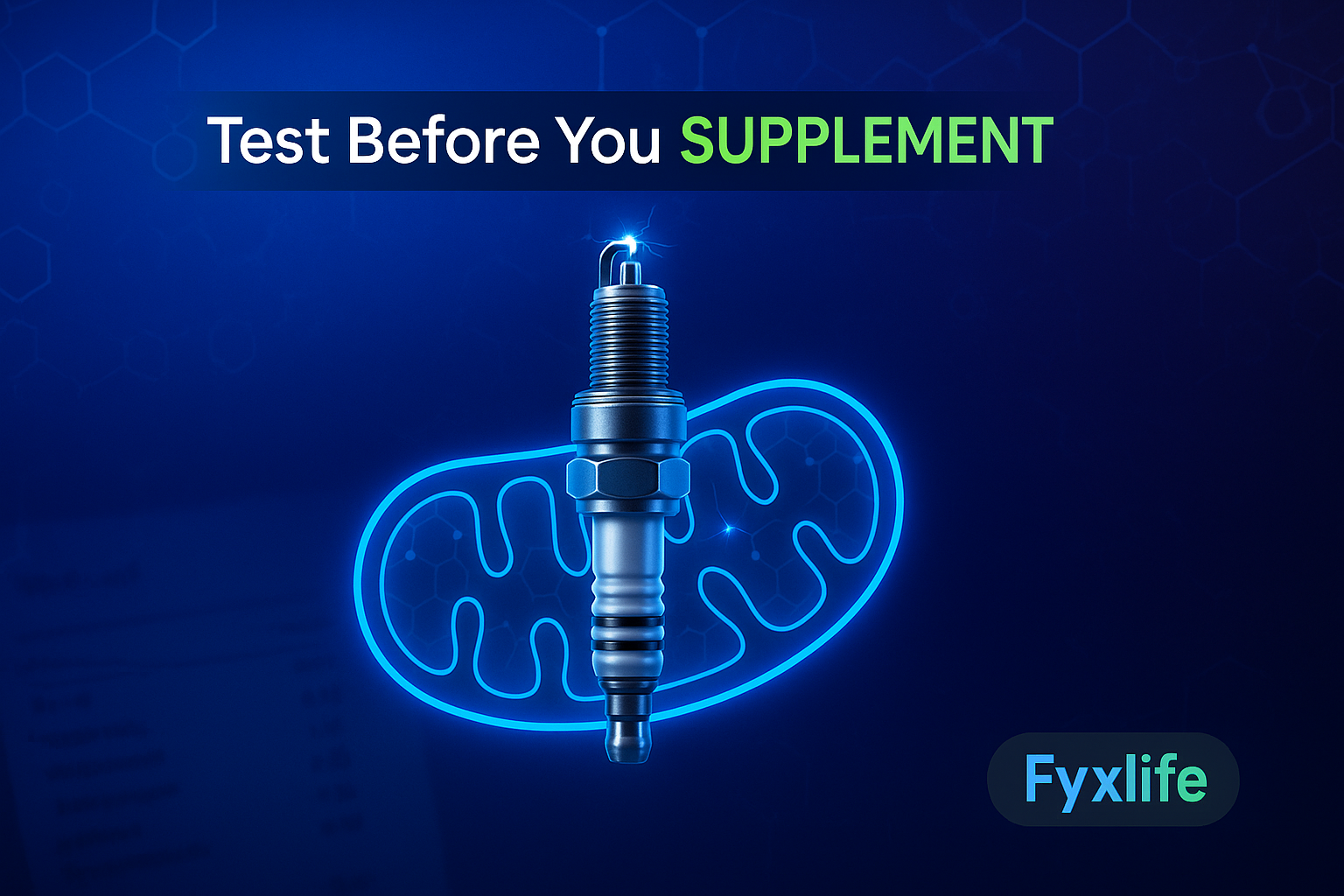
Think of CoQ10 as the spark plug in your cell’s engine. Your mitochondria — the power plants inside nearly every cell in your body — burn fuel in the form of glucose and fat to generate power in the form of adenosine triphosphate (ATP), the molecule your cells actually run on. But they cannot complete that process without CoQ10 shuttling electrons along the production line. CoQ10 is a mobile carrier — literally one of the rate-limiting steps in ATP production inside the mitochondrial electron transport chain, the biological assembly line that converts food into usable energy.
When CoQ10 is low, the engine misfires — not dramatically enough to stop the car, but enough that performance drops, the engine runs hotter, and wear accumulates faster. That “running hotter” has a precise biological meaning: without sufficient CoQ10, the electron transport chain leaks electrons, producing free radicals (unstable molecules that damage surrounding cellular structures, sometimes called oxidative stress). CoQ10 is an important antioxidant under investigation as a potential treatment for conditions involving mitochondrial dysfunction and oxidative stress — it does not just generate energy, it protects the machinery that generates it. Testing CoQ10 levels is like running a diagnostic on the spark plug before assuming the fuel or the engine is the problem.
Why age 35+ is the inflection point for CoQ10 decline
Your body makes CoQ10 endogenously — meaning it synthesises it internally, without you having to eat it. That synthesis is reasonably robust in your twenties. Then it starts to fall. CoQ10 levels in the body decline with age, making supplementation and monitoring increasingly relevant for adults in middle age and beyond. Age 35 is roughly where the research starts to show the curve bending downward in a clinically meaningful way — not a cliff, but a consistent slope. By the time most people notice symptoms they’d associate with “getting older” — slower recovery, less sharp mental energy, earlier fatigue during exercise — the decline has often been underway for years.
This is the core reason testing matters more at 35 than at 25. At 25, a baseline CoQ10 level is likely fine without intervention. At 45, it may not be — and you have no way of knowing without measuring it.
The Core Tests — What to Ask Your Doctor For
Test 1 — Plasma CoQ10 (ubiquinone/ubiquinol) level
This is the foundational test. A plasma CoQ10 level measures the circulating concentration of CoQ10 in your blood, typically reported in micromoles per litre (μmol/L). Normal reference ranges vary by laboratory, but most established labs consider a level below 0.40 μmol/L to be low, with optimal levels for adults generally cited above 0.65–0.75 μmol/L. The test can measure either the oxidised form (ubiquinone) or the reduced, active form (ubiquinol) — and importantly, which form your supplement contains affects which result you are tracking. More on that distinction below.
This is the number everything else in your CoQ10 protocol should anchor to. Without it, you are dosing blind.
Test 2 — Oxidative stress markers (urinary 8-OHdG or plasma MDA) [NEEDS VERIFICATION]
Because CoQ10 functions as a mitochondrial antioxidant — not just an energy carrier — it makes sense to measure the downstream damage it is supposed to prevent. 8-hydroxy-2-deoxyguanosine (8-OHdG) is a marker of oxidative DNA damage, measurable in urine, that reflects how much free radical stress your cells are experiencing. Malondialdehyde (MDA) is a plasma marker of lipid peroxidation — the process by which free radicals degrade cell membranes. Both are used in research contexts to assess mitochondrial oxidative stress. CoQ10 acts as an antioxidant inside mitochondria, and testing these markers alongside plasma CoQ10 gives you a fuller picture: not just whether your CoQ10 is low, but whether oxidative damage is actively accumulating as a result. Note that these tests are not routinely ordered in standard check-ups and may require a specialist or a comprehensive functional panel — confirm availability with your clinic before expecting them.
Test 3 — Cardiac and metabolic markers that CoQ10 research targets (hs-CRP, lipid panel, fasting glucose)
CoQ10 aids in cellular energy production and acts as an antioxidant, with studies linking it to benefits including improved heart health. The research on CoQ10 and cardiovascular outcomes is where the evidence is most developed — which means the tests that matter are the ones your cardiologist already uses. High-sensitivity C-reactive protein (hs-CRP) measures low-grade systemic inflammation (a chain reaction of damaging signals throughout the body that is independently associated with heart disease risk). A standard lipid panel tracks LDL, HDL, and triglycerides. Fasting glucose reflects metabolic function. None of these are CoQ10-specific — but they map to the outcomes CoQ10 research actually investigates. If CoQ10 is meaningfully improving your mitochondrial health, you should eventually see movement in these numbers, not just feel it.
Optional: Mitochondrial function proxies — VO2 max, grip strength, fatigue questionnaires
If you have access to a VO2 max test — the maximum rate at which your body can consume oxygen during exercise, considered the gold standard for cardiovascular and mitochondrial fitness — it is one of the most honest objective measures of whether your energy production capacity is improving. Grip strength, measurable with a simple hand dynamometer, is a validated proxy for overall muscle function and metabolic health that correlates with longevity outcomes in multiple large studies. Standardised fatigue questionnaires such as the Chalder Fatigue Scale give subjective energy a structured form, which is meaningfully better than a rough mental estimate. None of these replace a plasma CoQ10 level, but used alongside blood markers, they build a more complete picture of what is actually changing.
When to Test — The Sequence That Makes Sense
Baseline before you start supplementing
This is the non-negotiable step that most people skip. Before you take your first capsule, you need to know where you are starting. A plasma CoQ10 level, an hs-CRP, a lipid panel, and a fasting glucose — ideally all drawn in the same blood sample — give you a reference point against which every future result is measured. If your baseline CoQ10 is already within optimal range, the case for supplementation looks very different than if it is below 0.40 μmol/L. You cannot know which situation you are in without testing first.
Retest at 8–12 weeks after consistent dosing
Typical recommended dosages of CoQ10 range from around 100mg to 200mg per day, and most absorption studies suggest that steady-state plasma levels are reached within four to eight weeks of consistent supplementation. Retesting at the eight to twelve week mark gives the supplement sufficient time to produce a measurable change in plasma levels while keeping the experimental window tight enough that you are not waiting half a year for an answer. Take the same tests you ran at baseline: plasma CoQ10, hs-CRP, and metabolic markers. The comparison between these two panels is your actual data.
Annual tracking if you stay on CoQ10 long-term
If your results at twelve weeks show a meaningful improvement — in plasma CoQ10 levels and in the downstream markers — and you choose to continue supplementing, annual retesting keeps the picture current. CoQ10 requirements are not static. They change with age, with health status, and with medication changes. A single good result does not mean the dose you are taking today will be appropriate three years from now.
How to Interpret Your Results
What a low plasma CoQ10 level actually means
A plasma CoQ10 level below 0.40 μmol/L suggests that the circulating pool of this electron carrier is insufficient to meet cellular energy demands optimally. In practical terms, this means the mitochondrial spark plugs are running below spec — which can manifest as slower recovery after exercise, reduced cognitive sharpness, or a persistent low-grade fatigue that is not explained by sleep or thyroid function. It does not automatically mean CoQ10 supplementation will fix everything, but it does mean there is a plausible biochemical reason for the symptoms you may be experiencing, and a clear rationale for supplementation.
What counts as a meaningful change after supplementation
A meaningful response is generally defined as a rise in plasma CoQ10 of at least 50% from baseline, or reaching the 0.65–0.75 μmol/L threshold if you were below it. Alongside this, you are looking for a directional improvement in hs-CRP (lower is better), stable or improving lipid markers, and — if you are tracking them — reduced oxidative stress markers. Movement in all these directions together makes a much stronger case than a rise in CoQ10 alone. If your CoQ10 level rises but hs-CRP does not shift at all over twelve weeks, the next question is whether inflammation has a driver that CoQ10 cannot address on its own.
When results suggest CoQ10 is not the right lever for you
If your baseline plasma CoQ10 is already above 0.65 μmol/L and your fatigue, inflammatory markers, and metabolic numbers are all unfavourable, CoQ10 deficiency is probably not the root issue. This is important information — it redirects the investigation rather than closing it. Mitochondrial dysfunction has multiple possible drivers: iron deficiency, thyroid dysregulation, B vitamin insufficiency, and sleep disorders are all common contributors that can look like low-energy problems without any CoQ10 involvement. The value of testing is that it either confirms CoQ10 as a valid target or points the compass somewhere more productive.
Who Should Prioritise This Testing
Adults over 40 with fatigue, heart health concerns, or statin use
This is the highest-priority group. The age-related CoQ10 decline is most clinically relevant here, and the cardiac research on CoQ10 is directly applicable. Statin users deserve particular mention: statins are known to reduce endogenous CoQ10 synthesis — they work by inhibiting the same biochemical pathway (the mevalonate pathway) that produces both cholesterol and CoQ10. If you are on a statin and have never had your plasma CoQ10 measured, that is a gap in your monitoring. The fatigue and muscle discomfort that some statin users experience may have a CoQ10-related component, though the evidence on supplementation reversing these effects remains mixed and warrants a conversation with whoever manages your cardiac care.
High-intensity athletes and biohackers tracking performance output
For anyone using VO2 max, heart rate variability, or recovery metrics to track physiological performance, CoQ10 testing adds a mechanistic dimension to the data. If your performance markers are plateauing despite optimised training and sleep, and you have not tested mitochondrial support pathways, you are missing a variable. CoQ10 assists the mitochondria in cells to make more energy and helps prevent excess free radicals — the chemical alarm signals that accelerate cellular ageing — which means it sits directly in the pathway performance athletes care most about.
Post-COVID or chronic fatigue presentations [NEEDS VERIFICATION]
In communities dealing with unexplained fatigue following viral illness or antibiotic recovery, CoQ10 and mitochondrial support appear consistently in conversations about energy restoration. The pattern is recognisable: conventional medicine finds nothing overtly wrong on standard bloods, but the fatigue is real and persistent. Whether CoQ10 deficiency is a contributor in these presentations is not yet firmly established — the research on post-viral mitochondrial dysfunction is still emerging. But the testing framework described here is exactly what these cases need: an objective baseline rather than a trial-and-error supplement stack. If the plasma CoQ10 level is low, there is a testable hypothesis. If it is normal, the investigation needs to go elsewhere.
What to Ask Your Doctor — A Conversation Starter Script
The challenge with CoQ10 testing is that it is not part of any standard panel. Your GP will not order it by default, and some clinicians are not familiar with the clinical rationale for measuring it. That makes how you ask the question important. The following is a direct, evidence-grounded way to raise it without sounding like you have been reading supplement marketing. Try: “I’ve been reading about CoQ10 and mitochondrial function, and I understand plasma CoQ10 levels decline with age and can be affected by statins. I’d like to get a baseline plasma CoQ10 level tested alongside my lipid panel — is that something you can order, or should I use a private lab?” You are framing it as a monitoring question, not a request for a prescription. Most clinicians will engage constructively with that framing.
- Ask for: plasma CoQ10 level (specify ubiquinol if possible, or confirm which form the lab reports)
- Ask for: hs-CRP alongside your standard lipid panel and fasting glucose
- Ask for: a retest date at 8–12 weeks if you are starting or adjusting supplementation
- Note: if your clinic cannot order plasma CoQ10, private functional labs in Singapore such as those accessible through integrative medicine clinics can run it independently
The challenge is that this is exactly the kind of question a routine annual check-up was not designed to answer — not because doctors do not care, but because a 10-minute appointment built around population-level reference ranges was never designed to account for your specific risk profile, your current supplement stack, or your personal baseline. The framework in this article gives you the specific questions that make a focused, productive consultation possible.
What NOT to Do
Don’t use subjective energy as your only metric
Energy is the most context-sensitive thing you experience. It fluctuates with sleep quality, hydration, ambient temperature, stress load, caffeine timing, and a dozen other variables on any given day. If your only measure of whether CoQ10 is working is “I feel better,” you will almost certainly attribute normal positive variance to the supplement. That is not a reason to dismiss the symptom data — it is a reason to anchor it to objective markers so you can tell whether the feeling reflects something real happening at the cellular level.
Don’t skip the baseline — supplementing without testing is flying blind
Individual CoQ10 need varies — a baseline blood test before supplementing is the only way to know where you start. Someone whose CoQ10 is already at 0.80 μmol/L does not need the same intervention as someone at 0.30 μmol/L. Without a baseline, you cannot confirm a response, you cannot adjust the dose, and you cannot determine when — or whether — to stop. You are essentially running an experiment with no control condition.
Don’t conflate ubiquinone and ubiquinol test results without understanding the form you’re taking
Ubiquinone is the oxidised form of CoQ10 — the raw material that your cells reduce into the active form. Ubiquinol is that active, reduced form. Most CoQ10 supplements sold at standard price points contain ubiquinone; ubiquinol supplements are typically more expensive and marketed on the basis of better bioavailability for older adults. The form you are supplementing with determines which marker to track in your plasma results. If you are taking ubiquinol and your lab is reporting total ubiquinone, you may not be seeing the full picture. Before your retest, confirm with your lab which form they are measuring — and match it to the form you are supplementing.
The Single Next Step
Before your next medical appointment, write down three numbers you want to track: your current energy on a 1–10 scale, your most recent hs-CRP result (a marker of inflammation your GP may already have on file), and whether you have ever had a plasma CoQ10 level tested. Bring these to your doctor and ask specifically: “Can we run a plasma CoQ10 level alongside my next lipid panel so I have a baseline before I continue supplementing?” That one baseline test turns guesswork into a measurable 12-week experiment.