You eat reasonably well, you’re not sick, but something still feels off — unpredictable energy, sluggish digestion, a belly that won’t shift despite your best efforts. What most people in their 40s don’t realise is that the trillions of bacteria living in their gut are quietly running those symptoms. This protocol tells you exactly what to do — and what to stop doing — to fix it.
Before you assume this is another wellness rabbit hole, consider that gut health has travelled a long way from fringe territory. Interest in the terms “gut health” and “microbiome” as research and consumer topics has increased by close to 70-fold and 10-fold respectively in recent years, and the 2026 US dietary framework now explicitly names fermented foods and microbiome health in its guidance — a landmark shift in mainstream nutrition science. The science has caught up. The question is whether your daily habits have.
What This Protocol Is (And What It Is Not)
The difference between a supplement stack and a systemic gut reset
This is not a shopping list. It is not five capsules before breakfast and a green powder at noon. Most gut health marketing is built on the premise that you can buy your way to a healthy microbiome — drop in some probiotics, stir in some prebiotic powder, repeat. That misses the point entirely. The microbiome is an ecosystem, not a deficit to be topped up. A systemic reset means changing the conditions inside your gut so that the right species can outcompete the wrong ones over time. That takes a sequence of steps, not a product.
Who this is for — the 40-something with good-enough habits and still-broken symptoms
This protocol is designed for you if you eat what most people would consider a reasonable diet, you exercise occasionally, and yet your digestion is inconsistent, your energy dips without explanation, your weight responds poorly to effort, or your stomach feels perpetually unsettled. Midlife adults are now specifically identified as a high-priority window for microbiome intervention, with clinical and consumer research converging on this age group for good reason. Microbiome diversity typically declines through your 40s and 50s. The habits that maintained it in your 30s may no longer be sufficient. This protocol addresses that gap directly. It does not require expensive testing, specialist referrals, or radical dietary overhaul. It requires sequencing.
Understand the System Before You Fix It
Your gut as a rainforest — diversity is stability
Think of your gut microbiome like a rainforest. A healthy rainforest has thousands of species keeping each other in check — no single plant or predator takes over. Your gut works the same way. The problem isn’t usually one bad bacterium; it’s that the diversity collapsed, and a few opportunistic species moved in to fill the space. This protocol is not about killing the bad guys. It’s about restoring the conditions where the whole ecosystem can rebalance itself.
The word for a microbiome in good shape is not “clean” or “detoxed” — those are marketing terms. The real marker of a healthy gut is microbial diversity, meaning the number and variety of distinct bacterial species present. More diversity correlates with better metabolic health, more stable immunity, and lower levels of systemic inflammation. Less diversity correlates with the symptoms you are probably reading this article to fix.
The three things your gut bacteria actually do for you (energy, immunity, inflammation control)
What you eat doesn’t just feed you — it selectively feeds specific bacterial species with measurable downstream effects on energy extraction, inflammation, and immune response. Your gut bacteria are not passengers. They are active participants in your metabolism. They help determine how many calories you extract from food, how aggressively your immune system responds to everyday threats, and whether your baseline inflammation stays low or quietly accumulates into the kind of fatigue and metabolic dysfunction that frustrates people in midlife most.
How short-chain fatty acids act as your gut’s peacekeeping signal
Short-chain fatty acids (SCFAs) — chemical compounds produced when gut bacteria ferment dietary fibre — are the gut’s primary stability mechanism. They feed the cells lining your intestinal wall, regulate immune signalling, and keep inflammatory responses proportionate. Think of them as the gut’s peacekeeping currency. When the bacteria that produce them are depleted — through poor diet, antibiotic use, or chronic stress — the whole system becomes destabilised. When the abundance of SCFA-producing bacteria is insufficient, the risk of developing serious immune dysfunction rises substantially. You cannot supplement your way to adequate SCFA production. You have to feed the bacteria that make them.
Phase 1 — Remove What’s Disrupting the Ecosystem (Week 1–2)
The foods that consistently deplete beneficial bacteria
Highly processed foods — specifically those high in refined sugar, seed oils, artificial emulsifiers, and ultra-processed additives — consistently correlate with reduced microbial diversity. This is not about demonising any single ingredient. It is about the cumulative effect of a diet that offers your gut bacteria nothing to ferment, and simultaneously disrupts the mucosal layer that beneficial species need to colonise. For the first two weeks, the primary task is reduction: less packaged food with ingredient lists you cannot parse, less refined sugar, less alcohol. Not zero. Less.
Why antibiotics, NSAIDs, and chronic stress are silent microbiome disruptors
Antibiotics are the most widely understood disruptor — they are, by design, bactericidal, meaning they kill bacteria, and they do not discriminate between harmful and beneficial species. But the compounds most people in their 40s reach for daily are arguably more insidious: NSAIDs (non-steroidal anti-inflammatory drugs — the category that includes ibuprofen and aspirin) disrupt the gut lining with consistent use. Chronic stress elevates cortisol, which alters gut motility, reduces mucus production, and shifts microbial composition in ways that favour inflammatory species. If you are stressed, not sleeping, and relying on ibuprofen for weekly back pain — the dietary changes in Phases 2 and 3 will underperform until those inputs are addressed.
What NOT to do: why a crash elimination diet makes diversity worse, not better
The instinct when gut symptoms are bad is to restrict aggressively — cut gluten, cut dairy, cut FODMAPs, cut everything — and see what happens. The problem is that severe dietary restriction is one of the fastest ways to reduce microbial diversity. When you remove entire food categories, you remove the substrates that diverse bacterial species depend on. You may feel better briefly because you have removed an irritant, but you have also narrowed the rainforest. This protocol does not ask you to eliminate. It asks you to sequence.
Phase 2 — Feed the Good Bacteria (Week 2–4)
Prebiotic fibre — the food your bacteria eat, not the food you eat
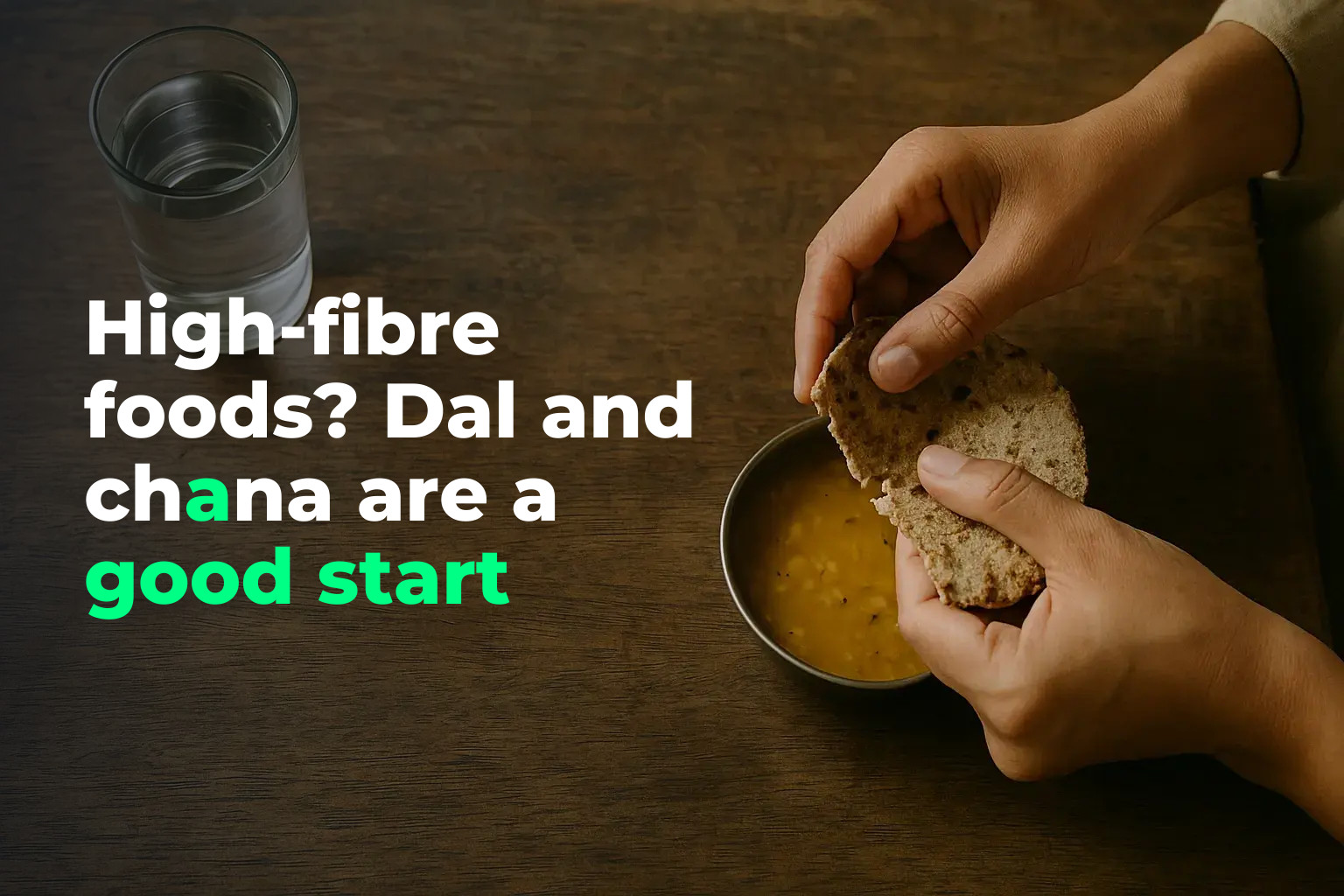
Prebiotic fibre — dietary fibre that your body cannot digest but your gut bacteria can ferment — is the foundation of everything else in this protocol. Without it, probiotics have nothing to sustain them. Without it, SCFA production drops. Without it, the rainforest starves. The primary sources are plant foods: vegetables, fruits, legumes, wholegrains, nuts, seeds, and herbs. Not supplements. Food.
The 30-plant-per-week target and why variety beats volume
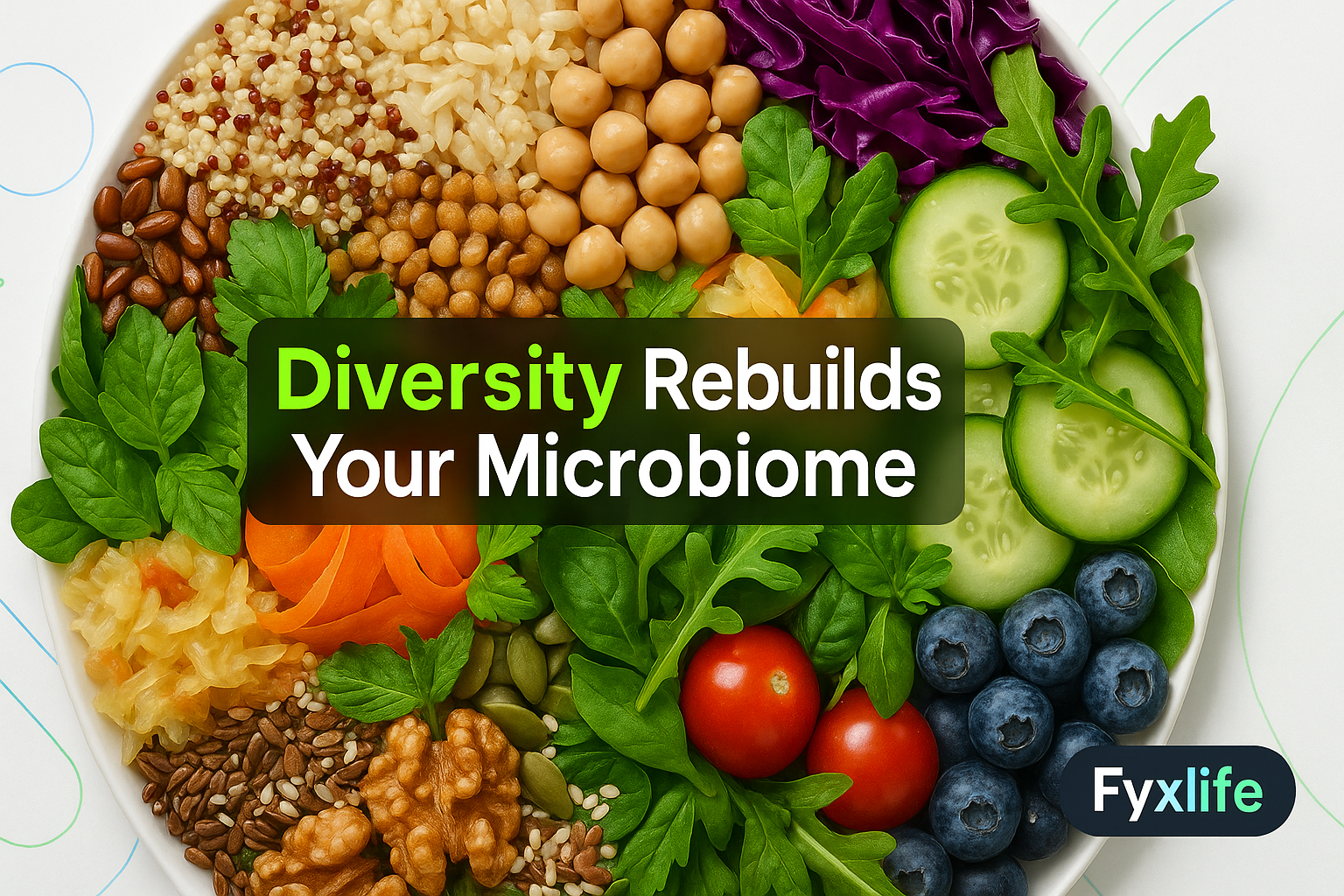
A useful working target, drawn from large-scale microbiome research, is thirty distinct plant foods per week. The mechanism behind this is not mysterious: different plants contain different types of fibre, and different types of fibre feed different bacterial species. Variety is what drives diversity. Eating large quantities of the same three vegetables every day does not accomplish the same thing as eating moderate amounts of fifteen different ones. Count herbs and spices — a sprinkle of cumin and a handful of fresh coriander are two more species on the list. Small additions compound.
Practical Singapore/APAC food swaps: tempeh, tau kwa, sweet potato, oats, bananas
For readers in Singapore and Southeast Asia, this phase is actually easier than it sounds. Sweet potato — ubi keledek — is one of the highest-prebiotic foods available and costs almost nothing. Firm tofu (tau kwa) provides plant protein alongside gut-supporting compounds. Unripe bananas and just-cooked-and-cooled rice are rich in resistant starch, a particularly effective form of prebiotic fibre that feeds SCFA-producing bacteria directly. Oats at breakfast, a handful of mixed nuts as a snack, and a side of kangkong or kai lan at dinner are not dramatic changes. They are the cumulative input your microbiome is waiting for. Even specific whole foods like fresh mango — widely eaten across Southeast Asia — have been studied in randomised controlled trials for measurable microbiome effects.
Phase 3 — Reintroduce Live Bacteria (Week 3–6)
Fermented foods vs probiotic supplements — what the evidence actually supports
Fermented foods are now formally recognised as a vehicle for delivering live beneficial bacteria to the gut, and the evidence supporting food-first approaches is more robust than the evidence for most probiotic supplements. The distinction matters. A fermented food contains a complex community of live organisms alongside the metabolic by-products of fermentation — organic acids, enzymes, and bioactive compounds — that supplements do not replicate. Supplements have their place, but they are not a substitute for fermented food.
The fermented foods that count: yogurt, kefir, kimchi, miso, tempeh
Plain yogurt with live cultures, kefir (a fermented milk drink with a broader bacterial profile than yogurt), kimchi, miso, and tempeh are your primary tools here. In a Southeast Asian context, you already have access to some of the most microbiome-supportive fermented foods on the planet. Tempeh is both fermented and a prebiotic substrate — it does double duty. Miso in a broth requires almost no preparation. The practical target for Phase 3 is one portion of a live fermented food daily. Not seven different types simultaneously — one, consistently.
How to read a probiotic label without being misled
If you choose to supplement, the label should tell you: the genus, species, and strain of each bacterium present (for example, Lactobacillus acidophilus NCFM — not just “Lactobacillus blend”), the number of live organisms at time of use rather than at time of manufacture (expressed in CFUs, or colony-forming units), and evidence of refrigeration requirements or appropriate encapsulation to ensure survival through stomach acid. A probiotic that does not specify strain, dose, or survival mechanism is not a product the evidence base applies to.
What NOT to do: megadosing probiotics without dietary fibre to sustain them
Taking a 50-billion-CFU probiotic capsule into a gut with no prebiotic fibre is the equivalent of planting trees in concrete. The organisms arrive, find nothing to eat, and are gone within days. Probiotic interventions are being studied as a tool to improve microbiome composition in the context of weight management — but that research is built on dietary fibre as the foundation, not probiotics in isolation. Phase 2 must precede or run alongside Phase 3.
Phase 4 — Maintain and Monitor (Ongoing)
The daily habits that protect microbiome diversity long-term
Maintenance is not a separate project. It is the accumulation of Phase 2 and Phase 3 habits made automatic. The daily variables that matter most are fibre variety, fermented food consistency, and the absence of the disruptors identified in Phase 1. You do not need to hit thirty plants every single week without fail. You need the average to be high enough that your microbiome has enough substrate to maintain diversity. Weeks where you travel or eat out heavily are not failures — they are inputs to compensate for in the following week.
Sleep, exercise, and stress — the non-food inputs most people skip
Microbiome composition is influenced by sleep quality, physical movement, and HPA axis dysregulation — the chronic over-activation of the body’s stress-response system, which disrupts gut motility, mucosal integrity, and bacterial balance simultaneously. Regular moderate exercise consistently correlates with greater microbial diversity across population studies. Seven hours of sleep is not a luxury in this context — it is a microbial maintenance requirement. If you are fixing your diet while running on five hours of sleep and high chronic stress, you are working against yourself.
How to know if the protocol is working without expensive testing
The signals are functional and subjective, but they are real. More consistent bowel movements without urgency or delay. Energy that tracks more predictably with sleep and meals. A reduction in the afternoon energy crash. Less bloating after eating foods that previously caused it. Fewer cravings for refined sugar, which often signals that SCFA production has improved and blood sugar is stabilising. These are not placebo effects — they are downstream outputs of a more stable gut ecosystem. Expect to see meaningful changes within four to six weeks of consistent Phase 2 and 3 adherence.
When to Consider Testing
What at-home microbiome tests can and cannot tell you
At-home gut microbiome sequencing tests — commercial products that analyse the bacterial species present in a stool sample — have become widely available and can be informative in a general sense. They can confirm whether your diversity score is low, flag the near-absence of specific SCFA-producing bacterial families, and track change over time. What they cannot do is tell you what to eat, interpret your results in the context of your full health picture, or provide clinical certainty about cause and effect. Use them as a rough compass, not a diagnosis. The challenge is that personalised interpretation of microbiome data requires someone looking at your full clinical profile — and that is rarely what a standard annual check-up is designed to do, not because doctors don’t care, but because population-level reference ranges were never built to account for your individual metabolic context.
Red flag symptoms that warrant a doctor visit, not a protocol
This protocol is not appropriate as a first response to rectal bleeding, unintentional weight loss, persistent pain, or significant changes in bowel habit that appear suddenly after years of consistency. These are symptoms that require clinical evaluation — not because gut health protocols are ineffective, but because those symptoms sit outside the territory this protocol was designed for. Similarly, if you have a diagnosed inflammatory bowel condition — IBD (Inflammatory Bowel Disease, which includes Crohn’s disease and ulcerative colitis) — a self-directed protocol is not a substitute for gastroenterology oversight.
The Single Most Important Rule in This Protocol
Everything in this protocol compounds. The fibre feeds the bacteria. The bacteria produce the short-chain fatty acids. The short-chain fatty acids stabilise the gut lining and regulate the immune system. The stable immune system lowers baseline inflammation. Lower inflammation improves energy, metabolic efficiency, and weight management outcomes. What you eat directly shapes which bacterial species thrive or die — and those species determine how well you extract energy, manage inflammation, and regulate immune response. The single rule is this: sequence matters more than intensity. Do not jump to Phase 3 without Phase 2. Do not attempt Phase 2 without clearing the disruptors in Phase 1. A protocol done in order at moderate effort will outperform an aggressive intervention done out of sequence every time. The rainforest does not regenerate because you dropped in seeds. It regenerates because the conditions became right for growth. Mainstream nutrition guidance is finally catching up to this framework. You do not have to wait for the next guidelines cycle to act on it.
This week, take one honest inventory: count how many distinct plant foods — vegetables, fruits, legumes, wholegrains, nuts, seeds, herbs — you ate in the last seven days. Write the number down. If it is under ten, that number is your gut’s biggest problem right now, and Phase 2 of this protocol is your immediate starting point. If it is already above twenty, move directly to Phase 3 and audit your fermented food intake instead.