
You’ve added the probiotic, cut the processed food, and still feel bloated, sluggish, or stuck at the same weight. The problem isn’t your commitment — it’s that most gut health advice is either too vague to act on or quietly missing the evidence. This protocol cuts through the noise with a step-by-step framework built on what the research actually supports.
The frustration is legitimate. You can feel it in any conversation among health-aware people: someone swears by their kimchi routine, someone else says their expensive probiotic changed nothing, and a third person insists the whole thing is overhyped pseudoscience. All three are partly right — because gut health advice, at its worst, skips the sequence. Order matters here more than almost any other health intervention. Get the order wrong and nothing works, regardless of how committed you are.
Why Your Gut Protocol Is Probably Backwards (And What To Fix First)
The Gut Is Not Just a Digestion Organ — It Runs Upstream of Your Immune System
Most people think of their gut as a tube that processes food. That mental model is about twenty years out of date. Research has confirmed that gut microbiota metabolites directly target and modulate the immune response — meaning the gut microbiome is not downstream of your immune system. It is upstream of it. This is not a small distinction. It changes which health problems you should think about solving through the gut, and it raises the stakes considerably for getting the protocol right.
The scale of scientific attention has followed. Research interest in fermented foods and the microbiome has increased by close to 70-fold and 10-fold respectively over the past decade. That kind of acceleration does not happen in fields that are merely trendy. It happens when the evidence keeps compounding in one direction.
The Plain-English Version of What a Healthy Microbiome Actually Does
Your gut is home to trillions of bacteria, fungi, and other microorganisms — collectively called the gut microbiome. When those bacteria digest the plant fibres you eat, they produce chemical signals called short-chain fatty acids (SCFAs) — the mechanism through which fibre intake connects to reduced inflammation and immune regulation. Think of SCFAs as the gut’s internal communication system, telling your immune cells how to behave. When the bacteria that produce these signals are insufficient, the risk of developing serious immune and systemic conditions rises significantly. Low fibre intake does not just mean slower digestion. It means a quieter, less calibrated immune system — one that is more likely to overreact or underperform.
The Protocol at a Glance — Five Phases in Order
Think of your gut microbiome like a garden. Probiotics are seeds. But if you throw seeds onto concrete — a diet full of ultra-processed food, chronic stress, and no fibre — nothing grows. The protocol is not about adding more seeds. It is about preparing the soil first: removing the weeds, adding compost, then watering consistently before you ever reach for a supplement. Here is how that plays out in practice.
Phase 1 — Remove the Biggest Disruptors First (What to Stop Doing)
Before you add anything, remove what is actively working against you. Ultra-processed foods — the ones engineered with emulsifiers, artificial sweeteners, and refined additives — are the clearest documented disruptors of microbial balance. Chronic sleep deprivation and sustained psychological stress alter gut motility and bacterial composition in measurable ways. Unnecessary antibiotic use is the most acute disruptor of all, capable of wiping out decades of microbial development in a single course. None of this means living in restriction permanently. It means identifying which of these is your biggest current exposure and reducing it first. One change that removes a consistent disruptor will outperform five additions that land on unprepared terrain.
Phase 2 — Build the Fibre Foundation (The 30g Rule and How to Hit It Without Misery)
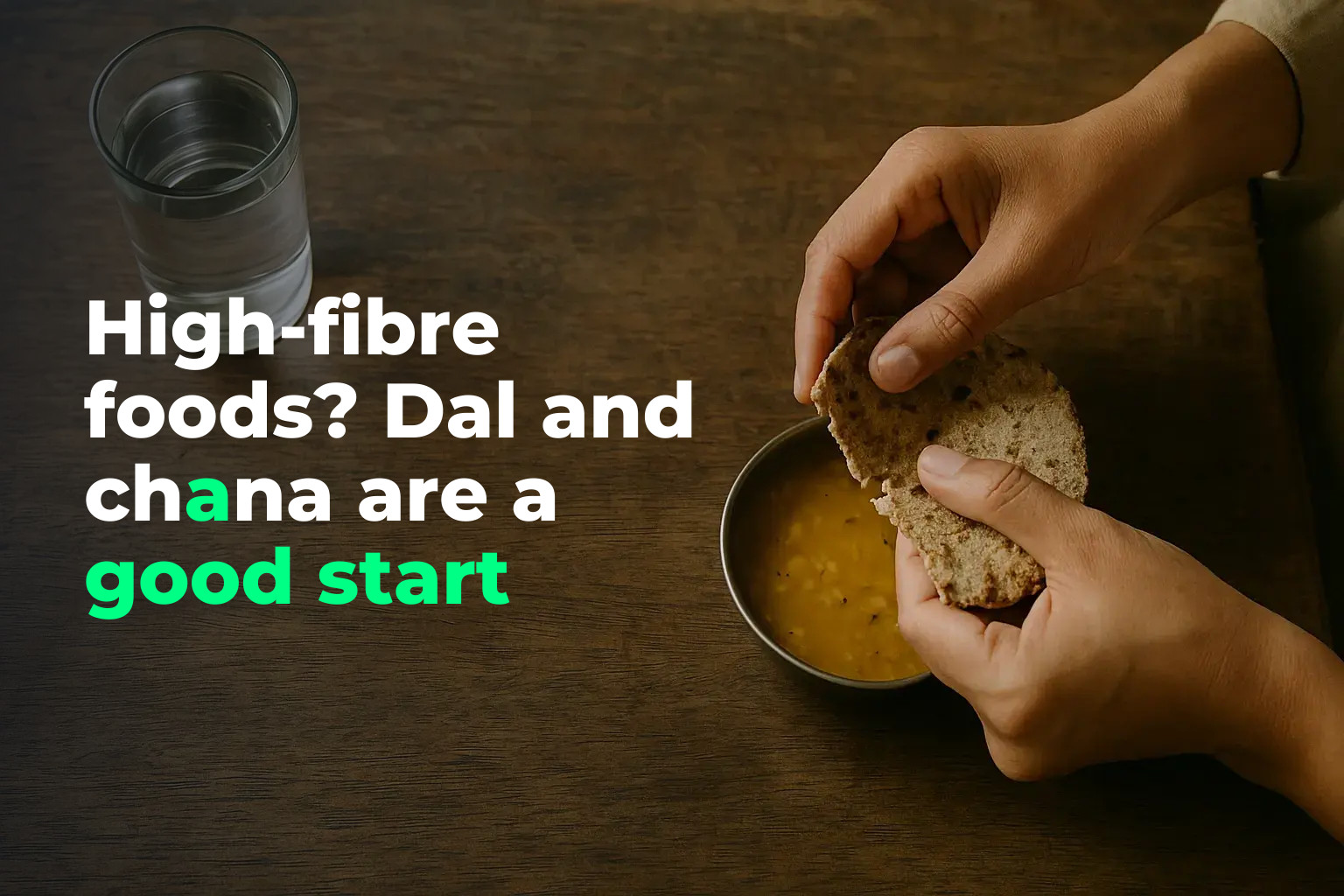
Thirty grams of fibre per day is the target most evidence points toward for meaningful SCFA production. The average adult in Singapore eats roughly half that. The gap is real, and closing it quickly — by suddenly eating lentils three times a day — is also how people end up bloated and convinced that gut health food makes things worse. The right approach is a gradual ten-day ramp. Add roughly five additional grams of fibre per week from whole plant sources: legumes, root vegetables, oats, seeds. Your bacteria need time to upregulate the enzymes that process these fibres. Go slowly and the transition is almost invisible. Go fast and you will feel it badly.
Food environment and overall dietary patterns — not just individual foods — are primary determinants of gut microbial composition. This is why a single superfood does not move the needle much. The whole dietary pattern is the intervention. Diversity within that pattern matters as much as quantity.
Phase 3 — Add Fermented Foods Strategically, Not Randomly
Fermented foods are recognised as one of the primary delivery vehicles for biotics — beneficial microbes and their bioactive byproducts — with a growing evidence base for their role in gut health. Tempeh, kimchi, yoghurt with live cultures, kefir, miso, and traditionally fermented vegetables all qualify. What matters is that they contain live cultures at the point of eating — not pasteurised, not cooked after fermentation. Start with one serving per day of a fermented food you find genuinely palatable. Forcing down something you dislike is not a protocol — it is a compliance disaster. Find one you enjoy and eat it consistently before adding more variety.
Phase 4 — Introduce Probiotics or Berberine Only Once Diet Is Stable
Supplements belong at Phase 4, not Phase 1. Most people do the opposite, and that is precisely why so many probiotic trials end in disappointment. If your dietary foundation is still poor when you introduce probiotics, you are planting seeds in concrete. Once your fibre intake is consistent and fermented foods are part of your routine, a targeted probiotic can offer additional support — particularly for specific strains matched to documented symptoms. Berberine has documented positive influence on gut microbiome composition, making it one of the few supplements with genuine mechanistic support in microbiome science. It is worth considering at this phase if metabolic concerns — blood glucose regulation, weight management — are part of your picture. But the keyword is at this phase. Not before.
Phase 5 — Track Something Measurable or You Are Guessing
Midlife consumers are increasingly targeted by gut health and microbiome supplement marketing, which means the noise is loud and the incentives of the industry are not always aligned with your actual results. The only protection against this is measurement. Without a baseline measurement of gut health status, it is not possible to determine whether any dietary or supplement intervention is producing a meaningful change. This does not have to mean an expensive microbiome sequencing test. It can start with a simple food and symptom diary: energy levels, bloating frequency, stool consistency, and dietary variety logged over two weeks. What you track, you can actually change.
What Not To Do — The Common Mistakes That Stall Progress
Mistake 1: Starting With Supplements Before Fixing Diet
This is the most common and most expensive mistake. A probiotic capsule that delivers five billion colony-forming units into a gut environment dominated by ultra-processed food and low fibre is not going to survive long enough to matter. The dietary environment selects which bacteria thrive. Change the environment first.
Mistake 2: Eating ‘Gut-Healthy’ Foods in a Low-Diversity Diet
Eating the same three “healthy” foods every week — even excellent ones — does not build microbiome diversity. It builds a microbiome optimised for those three foods, which is not the same thing. Research into gut microbial ecology across different populations confirms that it is the breadth of the dietary pattern that determines microbial richness — not the reputation of any individual ingredient. Rotating your plant foods matters as much as choosing good ones.
Mistake 3: Assuming Bloating Means You Are Doing It Wrong
When you increase fermentable fibre and add fermented foods, bloating in the first one to two weeks is normal. It is the bacterial population adjusting to a new substrate supply. It is not a sign of intolerance. It is not a reason to stop. The distinction worth monitoring is between transient bloating — which fades — and persistent bloating that worsens over weeks. The former is adaptation. The latter is worth investigating further.
How Long Does This Actually Take?
The Honest Timeline — What Changes Fast, What Takes Months
Some changes happen faster than most people expect. Stool frequency and consistency can normalise within one to two weeks of meaningful fibre increases. Energy levels often improve within the same window, partly because a more diverse microbiome produces a steadier flow of metabolic signals. Bloating — if it was diet-driven rather than structural — frequently resolves within three to four weeks once fibre is introduced gradually.
The deeper changes take longer. Meaningful shifts in microbial diversity, measurable reductions in systemic markers of inflammation (what researchers call inflammatory biomarkers), and changes in immune responsiveness are processes measured in months, not days. Three months of consistent dietary change is the minimum window to expect a measurable microbiome shift. Six months is where the changes become robust. This is not a detox. It is a long-term reconfiguration of your internal environment — and the research timelines reflect that.
The challenge here is exactly the kind of thing a routine annual check-up was not designed to address — not because doctors do not care, but because a ten-minute appointment built around population-level reference ranges cannot evaluate what your specific microbial composition is doing, what it was doing six months ago, and whether the changes you have made have shifted it meaningfully. That gap between generic guidance and personalised insight is real, and it is worth naming honestly.
The One Thing To Do This Week
This week, count how many different whole plant foods you eat in seven days — not servings, but distinct varieties. Research consistently links dietary diversity to microbiome diversity. If your number is below 20, that is your starting point. Add two new plant foods you do not normally buy on your next grocery run and track whether your energy or digestion feels different by day seven.