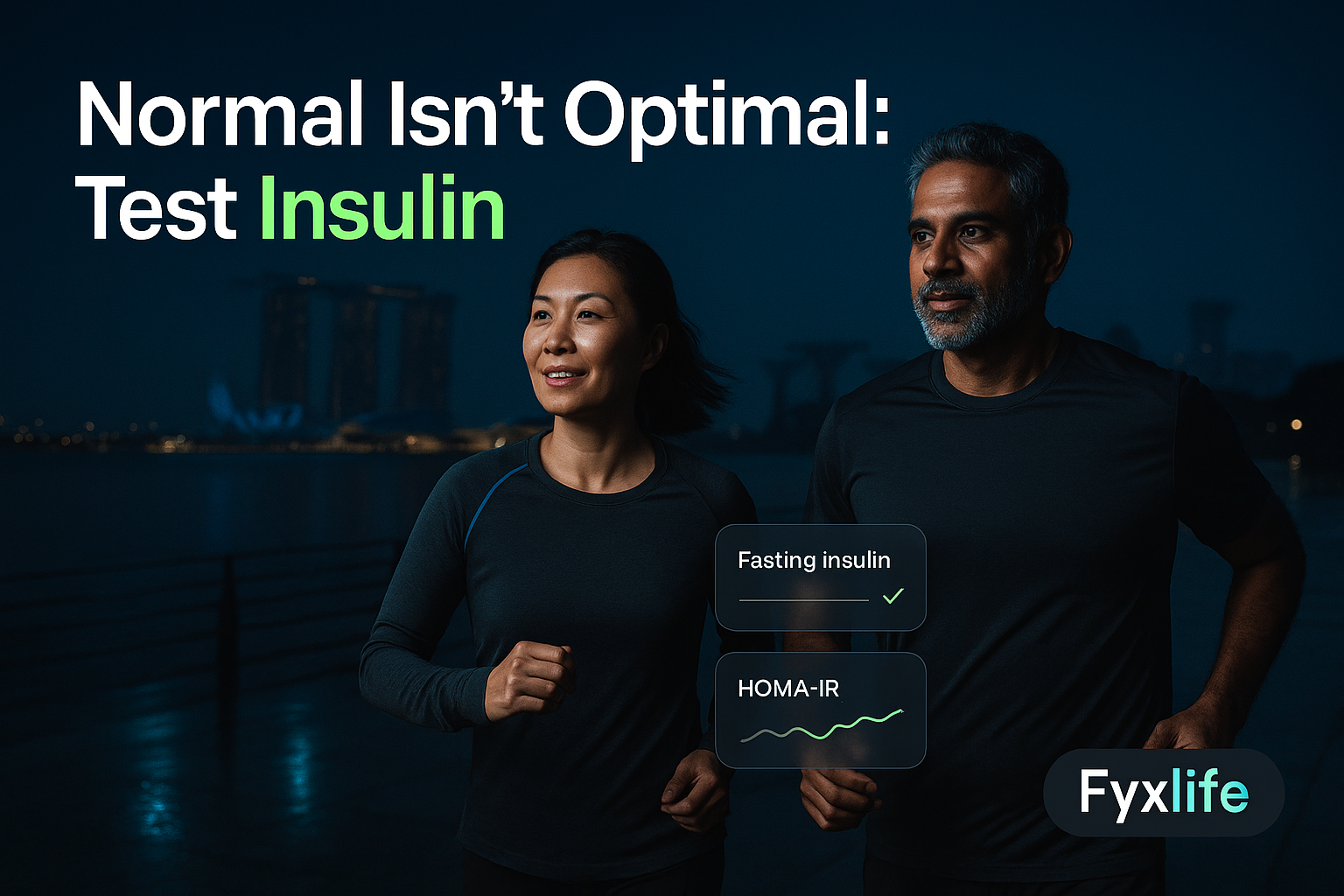
Your doctor said your results were normal. Your fasting glucose was fine, your HbA1c was fine — and yet something still feels off. Here is the problem: the standard panel is designed to catch diabetes after it has already arrived, not the decade of metabolic dysfunction that precedes it.
That feeling — the unexplained fatigue in the afternoon, the energy that never quite returns to what it was, the weight that has slowly redistributed around your middle despite not eating dramatically differently — is not imaginary. It may be metabolic. And the tests your doctor ordered almost certainly were not designed to find it at this stage.
Why Your Last Blood Test Probably Missed the Most Important Number
The gap between ‘normal’ and ‘optimal’ — how standard panels are calibrated for disease detection, not early prevention
Standard reference ranges for blood glucose were built around one question: does this person have diabetes? That is a useful question for acute clinical care. It is a terrible question if you are forty-five years old, broadly healthy, and trying to understand what is happening in your body a decade before a diagnosis might arrive. Fasting plasma glucose is the preferred screening tool in high-risk populations, but its limitations mean it detects diabetes at a late stage — by definition, after the years of rising insulin that precede it.
The gap between “your results are normal” and “your metabolic health is optimal” can be ten years wide. Reference ranges define the point at which a doctor must act. They do not define the point at which your body is still functioning without strain. These are not the same thing, and the difference matters enormously for anyone who wants to intervene before symptoms become diagnoses.
What fasting insulin actually measures and why it changes years before glucose does
Think of your blood sugar as the water level in a bathtub. Your doctor checks whether the tub is overflowing — that is diabetes. But fasting insulin tells you how hard the pump is working to keep the water level down. If the pump is running at maximum power just to maintain a normal water level, the system is already under serious strain — even though from the outside, the tub looks fine. Your glucose reads normal precisely because the insulin is compensating. The problem is hidden inside the compensation itself.
Elevated fasting insulin is a precursor to insulin resistance — appearing before HbA1c or fasting glucose shift out of the normal range — making it arguably the earliest meaningful signal in the metabolic decline sequence. And yet it is, as the same research notes, “rarely tested.” If it was not on your last blood panel, you are not unusual. You are the norm.
The Core Protocol — What to Test and In What Order
Step 1 — The minimum viable metabolic panel (fasting insulin + fasting glucose + HbA1c + lipids)
The starting point is a panel of four. Fasting insulin gives you the pump pressure. Fasting glucose gives you the water level in that moment. HbA1c — a measure of your average blood sugar over the preceding two to three months (the technical term is glycated haemoglobin) — tells you whether elevated readings are occasional or sustained. Fasting lipids complete the picture by revealing how your body is handling fat transport, which is intimately connected to insulin function. A comprehensive metabolic health panel includes fasting glucose, HbA1c, fasting insulin, lipids, and hs-CRP — markers that together provide a full picture of metabolic function when reviewed at minimum annually. Request all four at once. Running them separately across different appointments makes interpretation harder and costs you time.
Step 2 — Calculate your HOMA-IR score from the results you already have
Once you have fasting insulin and fasting glucose in hand, you can calculate a single number that researchers use to quantify how much insulin resistance (the body’s reduced ability to respond to insulin signals) is present. This calculation is called HOMA-IR — which stands for Homeostatic Model Assessment of Insulin Resistance. The formula is simple: multiply your fasting insulin (in µIU/mL) by your fasting glucose (in mmol/L), then divide by 22.5. If your glucose is in mg/dL instead, divide that figure by 18 first to convert it. The fasting insulin concentration from a standard blood draw is a potentially more convenient and clinically useful means of assessing insulin resistance than measuring glucose alone — and HOMA-IR is the tool that translates those two numbers into a single actionable score.
Step 3 — When to go further with an oral glucose tolerance test (OGTT)
A fasting test captures a single moment. What it cannot tell you is how your body responds dynamically to glucose — how high your insulin spikes after a meal, and how long it takes to come back down. This is where the oral glucose tolerance test, known as an OGTT, becomes relevant. Blood samples for glucose and insulin are taken at 0, 30, 60, and 120 minutes following a glucose load after an overnight fast — providing a dynamic picture of insulin response that a single fasting measurement cannot capture. Consider requesting an OGTT if your HOMA-IR is above 1.9, if your fasting insulin is elevated but your fasting glucose looks fine, or if you have symptoms that suggest post-meal blood sugar instability — energy crashes one to two hours after eating, difficulty concentrating in the afternoon, or unexplained hunger shortly after a full meal.
Pre-Test Rules You Cannot Skip
The 8–10 hour overnight fast: what it means, what breaks it, and why timing your blood draw matters
Fasting insulin is exceptionally sensitive to recent food intake. Even a small caloric exposure will cause your pancreas to secrete insulin, and that secretion will still be measurable hours later. For a valid fasting insulin test, blood must be drawn in the morning after an overnight fast with no caloric intake for at least 8 hours; water is permitted throughout the fast. Morning draws matter because cortisol — your body’s primary stress hormone, which rises at dawn — influences insulin dynamics. A midday draw after an “overnight fast” that ended at 6am introduces a confounding variable your doctor cannot account for.
What NOT to do before your test: the mistakes that produce false-normal insulin readings
The most common error people make is having a black coffee before the draw. Coffee — even without milk or sugar — triggers a hormonal response that can blunt insulin secretion and artificially lower your fasting reading, giving you a falsely reassuring result. Intense exercise the evening before can also shift your insulin sensitivity temporarily, making your reading look better than your baseline. For an OGTT specifically, patients must remain seated and avoid smoking during the test period — physical activity between draws will alter the glucose response curve significantly. If you are in the habit of taking your medications in the morning, check whether any of them affect insulin sensitivity before your draw. The goal is to capture your true fasting baseline, not a modified version of it.
How to Read Your Results Without a Medical Degree
Fasting insulin: the clinical cutoff versus the longevity-optimised range
Most labs flag fasting insulin as “high” somewhere above 25 µIU/mL. This is the clinical threshold — the point at which something is clearly wrong. But if you are optimising rather than simply avoiding disease, the relevant range is different. Longevity-focused clinicians and metabolic researchers typically consider fasting insulin above 10 µIU/mL as a signal worth investigating, and optimal levels in healthy, metabolically lean individuals are commonly in the range of 3 to 8 µIU/mL. Fasting insulin is listed as a key longevity biomarker in preventive health frameworks, where elevated levels signal early metabolic dysfunction well before a diagnosis of pre-diabetes or type 2 diabetes would be made. A result of 14 µIU/mL will not generate a red flag on your lab printout. It should generate a conversation.
HOMA-IR: how to calculate it and what the number actually predicts
A HOMA-IR below 1.0 is generally considered metabolically healthy. Between 1.0 and 1.9 is a zone worth monitoring. Above 1.9 suggests meaningful insulin resistance is present. Above 2.9, the research literature consistently associates this level with significantly elevated risk for type 2 diabetes, cardiovascular disease, and fatty liver disease. The number is not a diagnosis — it is a trajectory indicator. A HOMA-IR of 2.2 with a downward trend over six months tells a very different story than the same number with an upward trend. This is why tracking matters more than a single snapshot.
The pattern that matters most — reading glucose and insulin together, not in isolation
The most revealing signal is not any single number — it is the relationship between them. Normal glucose paired with high insulin means the compensation is working, but the system is strained. Normal glucose paired with normal insulin means genuine metabolic health. High glucose paired with low insulin may indicate a different mechanism entirely — one that warrants a completely different clinical conversation. Never let a normal glucose result reassure you if the insulin reading is absent from the picture. The water level looks fine. You need to know how hard the pump is working.
How Often to Test and What to Track Between Tests
Suggested retest cadence based on your baseline results
If your first results show a HOMA-IR below 1.0 and fasting insulin under 8 µIU/mL, annual retesting is reasonable. If your HOMA-IR sits between 1.0 and 2.0, testing every six months allows you to track whether lifestyle changes are moving the number in the right direction. Above 2.0, quarterly testing gives you meaningful data within a timeframe where intervention can produce visible results. Do not wait a full year to find out whether what you changed is working.
Trackable proxies between lab tests: waist circumference, energy patterns, fasting glucose at home
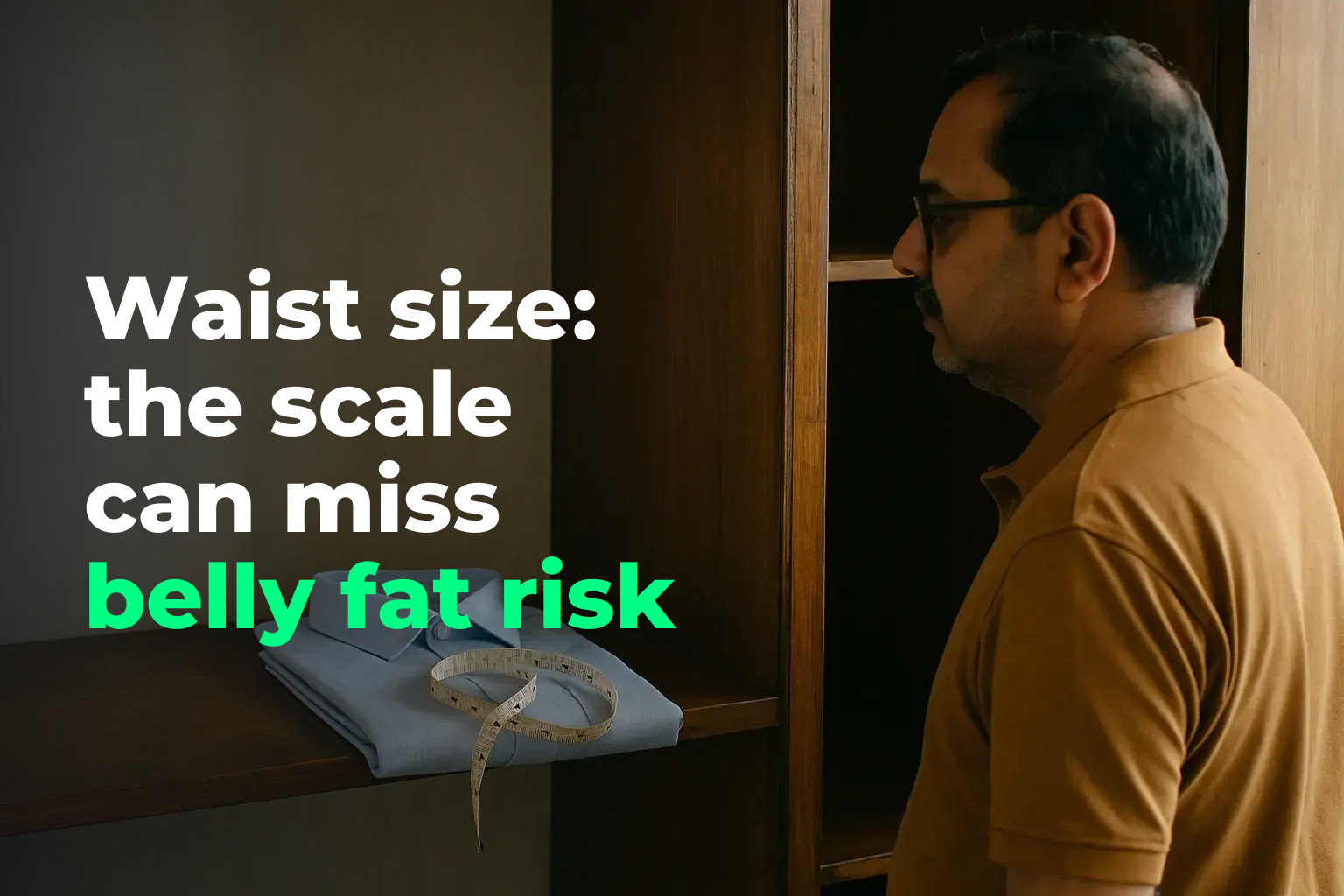
Between lab draws, three markers give you useful signal without requiring a blood test. Waist circumference — measured at the level of your navel, not your belt line — is one of the most reliable proxies for visceral fat accumulation (fat stored around your internal organs, which drives insulin resistance directly). For men, above 90cm in an Asian population is a meaningful threshold. For women, above 80cm. Post-meal energy patterns — specifically, whether you experience a significant energy dip 90 to 120 minutes after eating — can indicate post-meal blood sugar volatility that fasting tests will miss. And if you have access to a glucometer, tracking your fasting blood glucose at home on consecutive mornings once a month gives you a trend that a single lab draw cannot provide.
Having the Conversation With Your Doctor
Exact language to request fasting insulin when a doctor defaults to standard panels
Many proactive patients discover, often with genuine frustration, that their doctor will not automatically order fasting insulin when the standard panel looks normal. This is not indifference — it reflects how clinical guidelines are written, which is around population-level disease detection, not individual optimisation. The challenge is that this is exactly the kind of question a routine annual check-up was not designed to answer, not because doctors don’t care, but because population-level reference ranges were never built to account for your specific risk profile and the decade of rising insulin that may precede any change in glucose.
When you make the request, be specific and clinical in your framing. Say: “I’d like fasting insulin added to my panel — I want to calculate my HOMA-IR, as I’m aware elevated insulin can precede any shift in fasting glucose by years, and I’d like to establish my baseline while it’s still modifiable.” Most clinicians respond differently to a patient who names the mechanism than one who simply asks for “more tests.” Guidelines confirm that fasting insulin provides clinically useful information that fasting glucose alone cannot — you are not asking for something fringe.
What to do if your clinic does not offer the test — private lab options in Singapore and Southeast Asia
If your GP declines or your clinic’s standard panel does not include fasting insulin, the test is available privately across Singapore and the wider region. In Singapore, Raffles Medical, Healthway, and most private polyclinics can run a fasting insulin as an add-on to a standard lipid and glucose panel — typically at a cost of S$30 to S$60 for the insulin component alone. In Malaysia, Kuala Lumpur’s private diagnostic labs including Gribbles and Clinipath offer equivalent panels. In Thailand, Bangkok Hospital’s preventive health centre and Bumrungrad International both include fasting insulin in their metabolic screening packages. You do not need a specialist referral in most cases. You need a request form and a morning appointment.
The One Step to Take This Week
Before your next scheduled blood test — or when booking one — add fasting insulin to your request. If your current results include a fasting glucose reading, you already have one of the two numbers needed to calculate your HOMA-IR. If your fasting insulin comes back above 10 µIU/mL, bring that number to your doctor and ask specifically: “My fasting insulin is elevated but my glucose looks normal — can we discuss what that means for my insulin resistance risk and whether an OGTT is warranted?”