
You probably think of your immune system as something that lives in your blood and lymph nodes — a defensive army standing guard throughout your body. But the command centre for that army is almost certainly not where you think it is. It’s in your gut, and if you have a family history of heart disease, diabetes, or cancer, understanding this connection may be the most important thing you read this year.
Many people already sense this intuitively. If you’ve ever noticed that your digestion changed after a prolonged illness, or that a bout of gut trouble seemed to knock your whole system sideways, you weren’t imagining it. You were picking up on a relationship that immunology researchers have spent the last two decades trying to map with precision. The gut doesn’t just process food. It runs a continuous, high-stakes negotiation between the microbial world inside you and the immune machinery that determines how long you stay healthy.
The Surprising Location of Your Immune System’s Command Centre
Why the gut wall is your body’s most important security checkpoint
Think of your gut lining as a heavily staffed border checkpoint between two countries. On one side: trillions of microbes, some helpful, some potentially dangerous. On the other side: your immune cells, ready to act. The checkpoint staff — your gut epithelial cells and the protective layer they produce — decide what gets waved through and what gets flagged. When the checkpoint is well-staffed and the microbial community on the other side is healthy and diverse, the system runs smoothly. When the checkpoint is understaffed, or the microbial community becomes hostile and imbalanced, the wrong signals flood through — and your immune system, unable to tell friend from foe, stays permanently on high alert.
This is not a minor logistical detail. The mucosal barrier produced by gut epithelial cells acts as a critical defence mechanism, physically segregating microbes from host immune cells and reducing intestinal permeability — a process that, when functioning correctly, is one of the most sophisticated biological feats your body performs every single day. The gut wall is also where your body concentrates an enormous proportion of its immune tissue, making it far less a digestive organ than it is an immunological one.
How the mucosal barrier works — and what happens when it fails
The mucosal surfaces of the gut are among the most immunologically complex in the body, deploying both the fast, non-specific response system (what immunologists call innate immunity) and the targeted, memory-based system (adaptive immunity) — making them central to whole-body immune competence. This dual capacity is what allows the gut to tolerate beneficial microbes while mounting a rapid defence against harmful ones.
When this barrier degrades — a condition commonly called increased intestinal permeability, or more colloquially “leaky gut” — the checkpoint effectively loses staff. Microbial fragments and undigested proteins that should never cross the border begin slipping through. Your immune system detects the breach and responds. The problem is that it cannot always distinguish a legitimate threat from a false alarm, and so it keeps responding. Over time, this isn’t an acute immune response anymore. It becomes a slow, persistent background fire.
Your Microbiome Is Not a Passenger — It’s a Co-Pilot
How gut bacteria produce metabolites that talk directly to immune cells
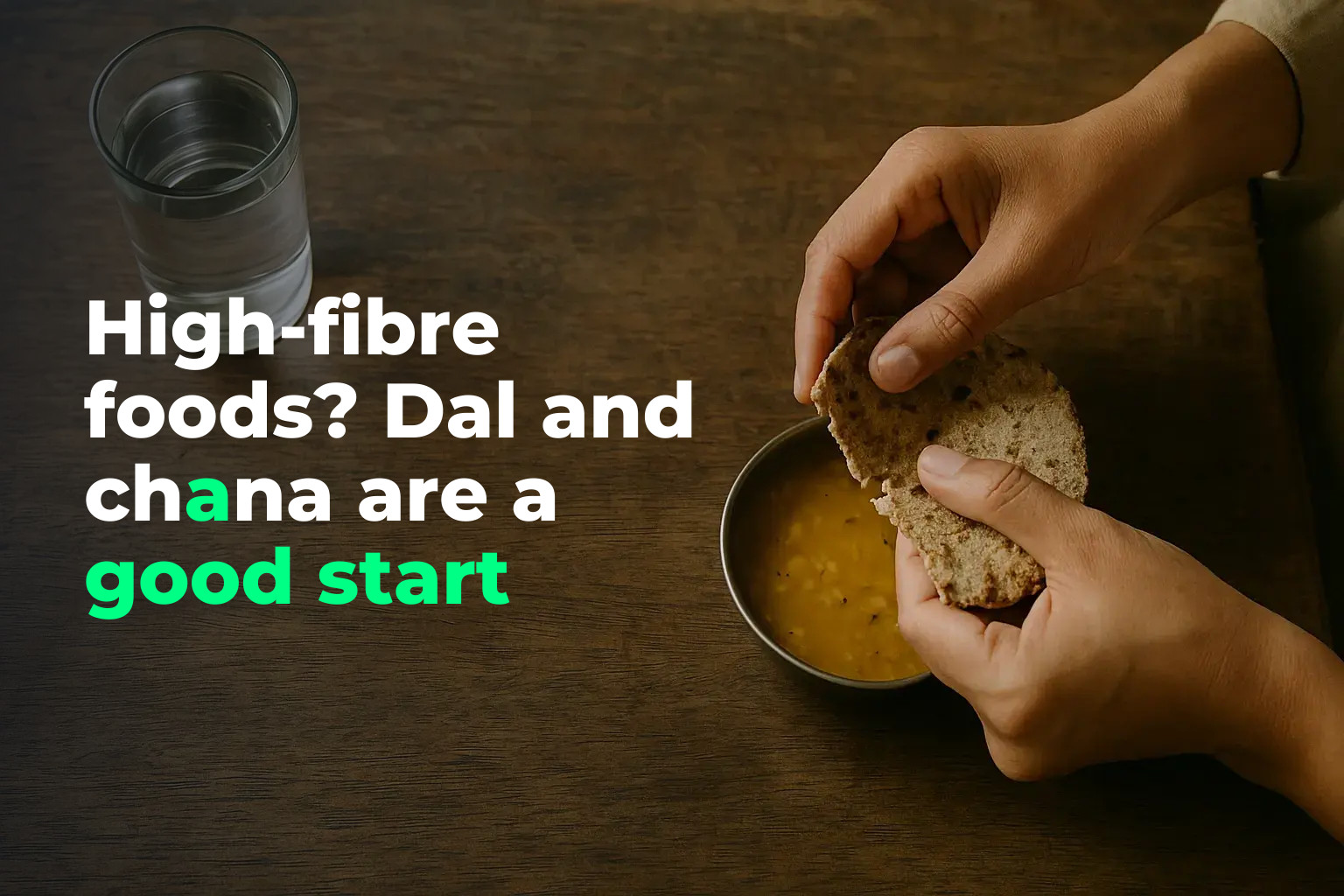
The trillions of microorganisms living in your gut — your gut microbiome — are not simply along for the ride. They are actively participating in your immune system’s decisions. The gut microbiome steers immune responses by producing metabolites from the food you eat — these compounds act as chemical signals that directly influence how immune cells behave throughout the body. When you eat fibre, certain bacteria ferment it and produce compounds called short-chain fatty acids — molecules that travel through the gut lining and help calibrate immune cell behaviour, reducing the tendency toward overreaction.
This is a fundamentally different way of thinking about food. The food you eat is not just fuel or raw material for tissue repair. It is the input that determines what signals your immune cells receive. Change the input, and you change the instruction set.
The difference between a diverse microbiome and a depleted one
A rich, diverse microbial community produces a wide range of these chemical messengers, giving the immune system the nuanced information it needs to respond proportionately. A depleted microbiome — one that has been narrowed by years of low-fibre eating, frequent antibiotic use, or chronic stress — produces a narrower, less sophisticated signal set. The immune system, receiving impoverished information, tends toward blunt, generalised responses. That means more inflammation, less precision, and a system that is harder to switch off. The connection between the gut microbiome and the immune system is complex and disruption of this connection is implicated in a wide range of chronic conditions — not as a contributing factor, but increasingly as a central mechanism.
When the System Works: Immune Homeostasis Explained
What ‘balanced’ actually means in gut-immune terms
The term immune homeostasis — the state of balanced, controlled immune activity — gets used loosely in wellness circles, but what it describes is precise and important. It means your immune system can ramp up quickly when there is a genuine threat, and wind down completely when the threat is resolved. It does not stay activated between threats. It does not attack your own tissue. It knows the difference between a pathogen and a piece of food.
The gut microbiota provides essential health benefits to its host, particularly by regulating this immune homeostasis — the state of balanced, controlled immune activity that prevents both under- and over-response. The microbiome is not just a supporting actor in this process. It is a primary regulator. Remove the microbiome from the picture, and immune homeostasis collapses.
How a healthy microbiome keeps chronic inflammation from igniting
A well-populated, diverse microbial community does something subtle but consequential: it trains immune cells in the gut to maintain tolerance. It distinguishes between harmless environmental molecules and genuine threats. It produces compounds that actively suppress the kind of runaway immune activity that, if left unchecked, becomes systemic — meaning it spreads beyond the gut and starts affecting tissue elsewhere. This is the checkpoint running as designed. The immune system stays informed, calibrated, and proportionate.
When the System Breaks Down: The Chronic Inflammation Link
How gut dysbiosis becomes a slow-burning fire
Gut dysbiosis — the disruption of the microbial community toward an unhealthy, imbalanced state — does not announce itself dramatically. You don’t feel the moment the checkpoint becomes understaffed. What you accumulate, over months and years, is a low-grade inflammatory signal that never fully resolves. This is what researchers call chronic low-grade inflammation, and it is one of the most consistent findings across the study of age-related disease. The fire is small. But it never goes out.
The mechanisms are becoming clearer. Dysbiosis reduces the production of short-chain fatty acids. It increases intestinal permeability. Microbial fragments — specifically a molecule from bacterial cell walls called lipopolysaccharide (LPS) — cross the gut barrier and trigger immune activation. The result is a body that is in a permanent, low-level state of alert, burning resources, generating tissue damage, and accelerating processes that look, from the outside, like normal ageing.
Why this matters if you have a family history of heart disease, diabetes, or cancer
If heart disease, metabolic dysfunction, or cancer runs in your family, this is where the gut-immune connection becomes personal. The same chronic inflammatory state that dysbiosis produces is the biological substrate that these diseases grow in. Arterial inflammation is a precondition for plaque accumulation (the process underlying cardiovascular disease known as atherosclerosis). Insulin resistance — the dysfunction at the core of type 2 diabetes — is worsened by inflammatory signalling. And the tumour microenvironment, which determines how aggressively certain cancers develop, is shaped in part by systemic immune tone. You are not inevitably going to develop what your parents developed. But if your gut-immune system is running hot, you are working with a disadvantage that your genes didn’t hand you — your habits did.
This is also the kind of question that a routine annual check-up was not designed to answer — not because doctors don’t care, but because standard population-level reference ranges were never built to account for the specific intersection of your microbiome, your inflammatory markers, and your family risk profile. The gap is real, and it matters.
The Gut-Brain Extension: Immunity Goes Upstream
Bidirectional communication — how gut signals reach the brain
The gut-immune story doesn’t end at the gut wall. There is a well-characterised communication network — the gut-brain axis — that runs bidirectionally through hormonal, neural, and immune pathways. The gut-microbiota-immune-brain axis regulates key immune pathways that influence neuroinflammation and broader brain function, extending the consequences of gut dysbiosis well beyond the digestive system. What happens in the gut does not stay in the gut.
The gut-brain axis enables bidirectional communication through hormonal, neural, and immune pathways — meaning gut immune status directly influences brain inflammation and neurological function. If you have noticed that periods of gut disruption coincide with brain fog, low mood, or unusual fatigue, this is likely why. The gut is sending upstream signals, and the brain is reading them.
Stress, gut dysfunction, and the feedback loop that makes both worse
The communication runs in both directions, which creates a feedback loop that can be genuinely difficult to interrupt. A chronic inflammatory state driven by gut-immune dysfunction may lead to increased responsiveness to stress, creating a feedback loop that further destabilises immune regulation. Stress hormones — particularly cortisol — alter gut motility, reduce barrier integrity, and shift the composition of the microbiome toward dysbiosis. A dysbiotic gut then amplifies inflammatory signals to the brain, increasing stress sensitivity. The loop closes on itself. Breaking it requires intervention at multiple points, but the gut is the most accessible one.
What Actually Shapes Your Gut-Immune System
Diet as the most powerful lever — how probiotics and fibre influence immune responses
Of all the inputs that shape your microbiome — and through it, your immune system — diet is the most powerful lever you have direct, daily control over. Dietary probiotics have been shown to increase immunity and reduce inflammatory reactions in the host — meaning fermented foods like yoghurt, kefir, kimchi, and tempeh are doing more than supporting digestion. They are actively participating in immune regulation. Diverse plant fibre feeds the bacteria that produce short-chain fatty acids, the compounds that keep the immune system calibrated and the gut barrier intact.
Diversity is the key word. Research consistently shows that a wide variety of plant foods — different vegetables, legumes, whole grains, nuts, seeds — supports a richer microbial community than any single superfood. The microbiome reflects the range of what you eat more than the quality of any individual ingredient. The colonisation of gut microflora is itself regulated by the immune system, which controls the ability of intestinal microorganisms to bind to the mucosa — confirming that this is a two-way system. Feed the microbiome well, and it supports the immune system. A well-supported immune system creates conditions for a healthy microbiome to thrive.
What undermines the system — and what the research actually supports
The research is less equivocal about what damages the gut-immune relationship than popular health coverage suggests. Processed foods high in emulsifiers and refined sugar consistently appear as disruptors of gut barrier integrity. Repeated courses of broad-spectrum antibiotics reduce microbial diversity in ways that can take months to recover from. Chronic sleep deprivation alters the gut microbiome composition within days. Sedentary behaviour is associated with lower microbial diversity, while even moderate regular movement supports it. None of this requires expensive supplements or radical interventions. It requires understanding that the gut-immune system is a biological system that responds to the conditions you create for it — consistently, cumulatively, over time.
The One Mechanism Insight to Apply This Week
Apply this one mechanism insight to a decision you are already making this week: the next time you choose what to eat, treat it as an immune decision, not just a digestive one. If your diet is currently low in fermented foods and diverse plant fibre — the two inputs most directly shown in the research to support the gut microbiome and regulate immune responses — identify one specific swap or addition you can make at your next meal. You are not changing your diet; you are changing one input to your immune command centre.