
You’ve tried cutting carbs, avoiding gluten, and buying every new superfood powder — and you’re still bloated, tired, and inflamed. The problem isn’t your willpower. It’s that anti-inflammatory eating has been made far more complicated than it needs to be. This protocol cuts through the noise with a step-by-step framework built on what the research actually supports.
If you’ve ever stood in a health food aisle genuinely unsure whether you need collagen peptides or a probiotic or a mushroom adaptogen, you already understand the problem. The wellness industry profits from your confusion. What it rarely offers is a clear, evidence-grounded framework that you can actually use without a nutrition degree or a hundred-dollar supplement order. That’s what this is.
What Is Chronic Inflammation and Why Your Diet Is Either Making It Worse or Better
The difference between acute inflammation (useful) and chronic low-grade inflammation (silent damage)
Inflammation is not inherently bad. When you sprain your ankle or fight off a virus, your immune system floods the area with immune signalling proteins (cytokines) — chemical alarm signals that direct repair and defence. That process is acute inflammation, and it’s exactly what you want. It resolves. The swelling goes down, the infection clears, life continues.
The problem is a different, quieter version: chronic low-grade systemic inflammation — a persistent, below-the-radar activation of your immune system that never fully switches off. There is no obvious swelling. No fever. Just a body running slightly less efficiently than it should, for years, in ways that quietly accumulate into disease risk, fatigue, and metabolic dysfunction.
Think of it like a slow gas leak in your house. You can’t smell it, nobody is coughing yet, but every appliance is running less efficiently and the risk of something going wrong is quietly building. Your diet is either sealing those leaks — with anti-inflammatory foods that calm the chemical alarm signals in your body — or it’s leaving the valves open with ultra-processed foods and refined sugar that keep the alarm ringing 24 hours a day. The protocol is not about eating perfectly. It is about closing more valves than you open, every day.
Plain English — what the Dietary Inflammatory Index actually measures
Researchers needed a way to measure how pro- or anti-inflammatory a person’s overall diet is — not any single food, but the whole pattern. The tool they developed is called the Dietary Inflammatory Index (DII). It scores your diet based on how individual food components — things like fibre, omega-3 fatty acids, saturated fat, and refined carbohydrates — collectively push your body’s inflammatory markers up or down.
This matters because the DII doesn’t just predict blood markers. Research shows it mediates the relationship between your lifestyle patterns and chronic disease outcomes, making dietary management one of the highest-leverage interventions in preventive health. Studies linking the DII to all-cause and cardiovascular mortality confirm this is not theoretical. The score predicts real outcomes. And the good news is that the score is moveable — every meal is a vote.
The Core Protocol — Your Anti-Inflammatory Eating Framework
Step 1 — Choose your operating system: why the Mediterranean diet is the evidence-backed default
You don’t need a branded protocol or a proprietary meal plan. You need an operating system — a default framework that shapes daily decisions without requiring you to calculate macros or memorise a food scoring system. The Mediterranean diet is the most evidence-supported dietary framework for reducing chronic inflammation, and it maps almost perfectly onto the principles of anti-inflammatory eating.
What makes it work isn’t any single ingredient. It’s the pattern: an abundance of whole plant foods, regular oily fish, olive oil as the primary fat, legumes and whole grains as the starchy base, and minimal ultra-processed food. It’s also, crucially, not restrictive in the way crash diets are. You’re not eliminating food groups. You’re shifting the ratio of what’s on your plate.
Step 2 — Build your plate with the ‘eat more’ list
Documented anti-inflammatory foods are not exotic or expensive. Green leafy vegetables — spinach, kale, kangkong — consistently score well on the DII because of their fibre content, polyphenols, and micronutrient density. Colourful vegetables like capsicum, tomatoes, purple cabbage, and carrots bring a different range of plant compounds that work through complementary pathways. Whole grains — brown rice, oats, quinoa — provide the slow-release energy and fibre that refined grains strip away.
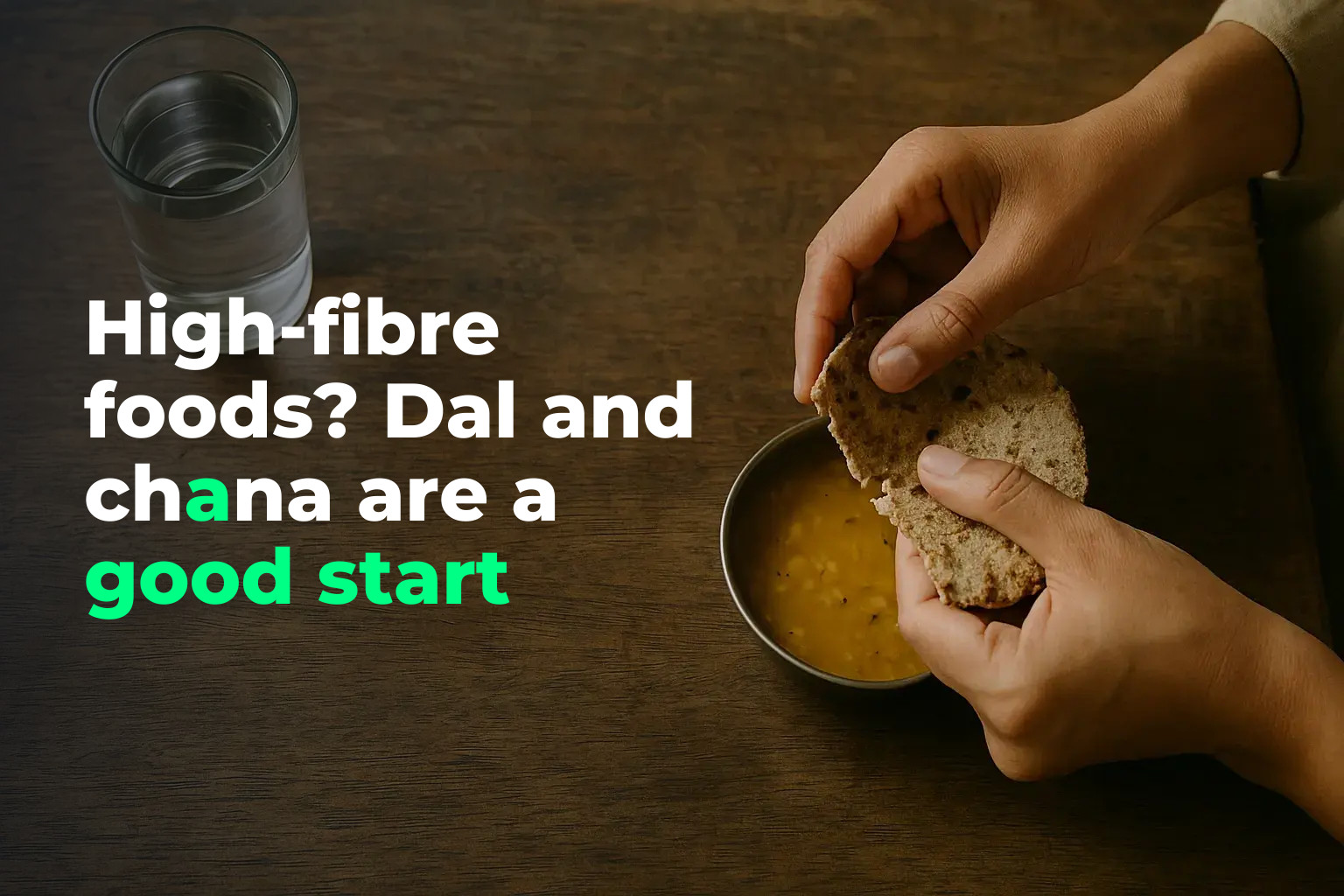
Oily fish is your primary animal protein: salmon, sardines, mackerel, anchovies. The omega-3 fatty acids in these fish directly counter the pro-inflammatory signalling compounds your body produces when it’s under stress. Legumes — lentils, chickpeas, black beans, edamame — deliver a combination of protein and soluble fibre that your gut bacteria convert into compounds with measurable anti-inflammatory effects. Nuts, especially walnuts and almonds, add healthy fats and polyphenols. And extra-virgin olive oil, used generously as a dressing or cooking fat, is one of the most studied anti-inflammatory ingredients in the human diet. Build your plate with these as the foundation, not the garnish.
Step 3 — Identify and reduce your personal ‘eat less’ list
The pro-inflammatory side of the ledger is where most people already have a sense of the problem, even if they haven’t named it. Refined sugar is the clearest offender — it drives rapid spikes in blood glucose, promotes insulin resistance over time, and directly upregulates inflammatory signalling pathways. Ultra-processed foods compound this: they’re typically high in refined carbohydrates, industrial seed oils in excess quantities, and additives that disrupt the gut lining.
Processed meats — deli ham, sausages, hot dogs — appear consistently in the pro-inflammatory column, partly due to their preservative content and saturated fat profile. The key insight here is that you don’t need to eliminate these foods completely to make progress. Research shows a nonlinear dose-response relationship between pro-inflammatory dietary components and harm — meaning even partial reductions in these foods produce meaningful benefit. You are not choosing between perfect and pointless. Cutting your refined sugar intake by half still moves the needle significantly.
Step 4 — Add fermented foods for the gut-brain connection
One of the most underappreciated dimensions of anti-inflammatory eating is what it does to your brain, not just your body. Long-term anti-inflammatory eating patterns may help prevent depression and anxiety, while pro-inflammatory patterns may promote these conditions — establishing diet as a genuine mental health lever. This connection runs primarily through the gut. The billions of bacteria that live in your digestive tract communicate with your brain through what researchers call the gut-brain axis — a bidirectional signalling highway that influences mood, stress response, and cognitive function.
Fermented foods feed and diversify this ecosystem. Yogurt with live cultures, kimchi, sauerkraut, kefir, and tempeh all introduce beneficial bacteria directly into your gut while also delivering the prebiotic fibre those bacteria need to thrive. You don’t need large amounts. A small serving of fermented food most days is enough to make a meaningful contribution to gut microbial diversity — and through that, to systemic inflammation.
What NOT to Do — Common Mistakes That Undermine the Protocol
Don’t chase individual superfoods — overall dietary pattern is what moves the needle
Turmeric lattes and açaí bowls are not a protocol. They are marketing. The research on anti-inflammatory eating is unambiguous: it is the overall dietary pattern, scored across weeks and months, that predicts outcomes — not whether you ate a single anti-inflammatory food today. A diet built around ultra-processed food with a turmeric supplement added still scores pro-inflammatory on the DII. Stop optimising at the ingredient level when the architecture of the whole diet is the actual lever.
Don’t aim for perfection — the dose-response relationship means partial improvement counts
Perfectionism is one of the most reliable ways to abandon a dietary shift entirely. The dose-response evidence is genuinely liberating: you do not need a perfect week. You need a better average. Three anti-inflammatory meals out of fourteen is a worse average than ten out of fourteen — and ten out of fourteen will measurably shift your inflammation markers over time. Progress is not binary. It accumulates.
Don’t confuse elimination diets with anti-inflammatory eating — restriction is not the same as nourishment
This is perhaps the most important distinction in the entire protocol. Elimination diets — removing gluten, dairy, nightshades, lectins — are diagnostic tools. They help identify specific intolerances in specific individuals. Anti-inflammatory eating, by contrast, is an additive strategy. The goal is to crowd your plate with foods that actively support immune regulation, gut health, and metabolic stability. Removing a suspected trigger food while eating predominantly processed food does almost nothing to your DII score. The foundation is abundance of the right foods, not restriction of the wrong ones.
The Singapore and Southeast Asia Context — What to Know If You Eat Here
Local foods that are naturally anti-inflammatory
The good news for anyone eating in Singapore or across Southeast Asia is that the local food culture already contains many of the building blocks of anti-inflammatory eating — if you know where to look. Fish-based dishes like fish soup, steamed fish with ginger and scallion, and assam laksa (in its fish-forward form) align well with the protocol. Vegetable-rich hawker options — stir-fried kangkong, chye sim, bitter gourd with egg — deliver the leafy greens and colourful vegetables the research consistently endorses.
Fermented foods are woven into the regional culinary fabric: tempeh, belacan in small amounts, pickled vegetables, and miso-based soups all contribute. The challenge is the other end of the spectrum — the ubiquity of white rice as a refined starch base, the prevalence of sweetened drinks including kopi and teh tarik, and the deep-frying and high-sodium profiles of many hawker staples. The protocol doesn’t require you to abandon hawker culture. It requires you to be deliberate about what you choose within it.
Asian-specific metabolic risk at lower BMI — why this protocol matters even if you’re not visibly overweight
A critical point for this region: people of Asian descent carry significantly higher metabolic and cardiovascular risk at lower body mass index (BMI) thresholds than Western population norms suggest. Visceral fat — the fat that accumulates around internal organs and drives inflammation directly — can be elevated even in someone who appears lean by standard measures. Research on DII and cardiovascular mortality outcomes is particularly relevant here because it captures risk that BMI alone does not. If you’ve been told your weight is fine, that is not the same as being told your inflammatory load is fine. The two are not identical, and in this population more than most, that distinction matters.
How Long Before You Notice a Difference?
What the research says about timelines for inflammation markers to shift
Clinical trials using structured anti-inflammatory eating interventions typically observe measurable shifts in inflammatory biomarkers — including C-reactive protein (CRP), a blood marker of systemic inflammation, and interleukin-6 (IL-6), a key inflammatory signalling protein — within four to twelve weeks of consistent dietary change. Studies on Mediterranean diet adherence in the context of inflammatory conditions like rheumatoid arthritis confirm real-world clinical impact beyond metabolic markers. The gut microbiome, which mediates much of diet’s anti-inflammatory effect, shows measurable shifts in composition within two to four weeks of sustained dietary change. Four weeks is not long to wait for a result with decades of downstream consequence.
How to track your progress without a lab test
You don’t need blood work to notice early signals. The most reliable subjective markers in the first two to four weeks are energy consistency through the afternoon — the 3pm crash is partly an inflammatory and blood sugar phenomenon — gut comfort including bloating and bowel regularity, and sleep quality. People following balanced, anti-inflammatory eating patterns have been observed to experience more stable energy levels throughout the day. That’s a signal you can feel without a lab requisition form. Track it subjectively, honestly, for thirty days. The pattern will tell you something useful.
If you want objective data, a high-sensitivity CRP (hs-CRP) blood test is inexpensive, widely available in Singapore through most GP clinics and health screening packages, and directly measures systemic inflammation. A baseline reading before you start, and a follow-up at eight to twelve weeks, gives you something concrete to work with. This is exactly the kind of question — what is my actual inflammatory load right now — that a routine annual check-up rarely prioritises, not because doctors don’t care, but because standard panels were built around detecting disease, not tracking the slow drift toward it. Knowing your number is worth the thirty-dollar blood draw.
Your Week One Starting Point — One Concrete First Step
This week, pick one meal per day — ideally lunch — and rebuild it using only the ‘eat more’ list: a base of leafy or colourful vegetables, a palm-sized portion of fish, legumes, or tofu, and a drizzle of olive oil. Do not overhaul your entire diet. Just hold that one meal consistent for seven days and notice whether your afternoon energy or gut comfort shifts. One meal, one week, one honest observation.