Your cholesterol is fine. Your blood pressure is normal. Your doctor says you’re healthy — and yet something feels off, and your family history says otherwise. Chronic inflammation is the threat that standard checkups almost always miss, and it has been quietly linked to heart disease, cancer, diabetes, and accelerated biological ageing. Here is what it actually is, how it works, and which markers tell you whether it is already burning inside you.
The frustrating part is that this is not a fringe concern. It is not something doctors dismiss because the evidence is thin. The evidence is substantial. The problem is structural: the standard annual health screen was built to catch what is already broken, not to detect the slow-burning process that precedes the break. If you have a family history of heart disease, type 2 diabetes, or cancer, understanding your inflammation markers is not optional. It is the earliest warning system available to you.
What Is Chronic Inflammation — And Why Is It Different From Normal Inflammation?
The Good Fire vs. The Slow Burn
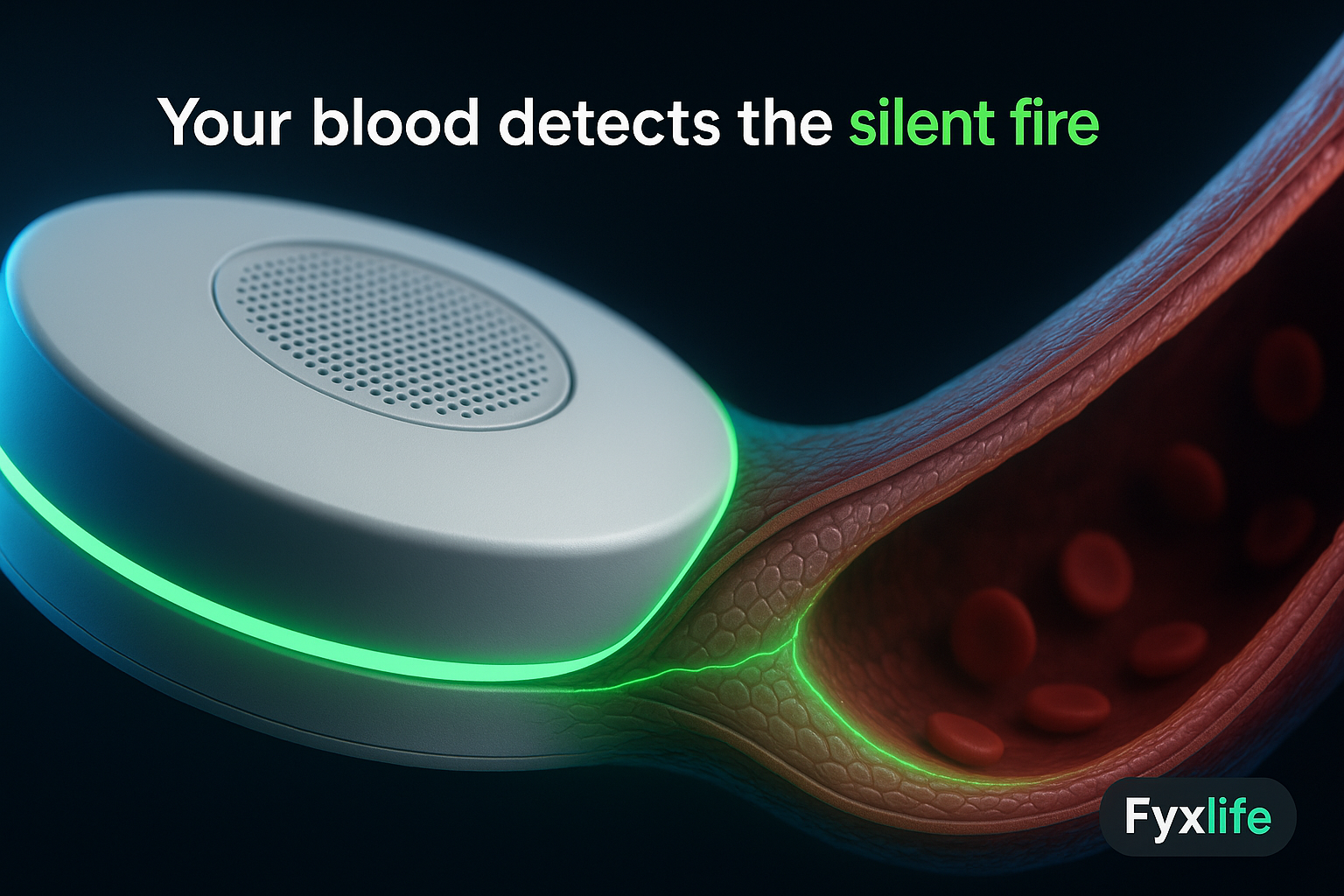
Think of your immune system as a smoke alarm. Acute inflammation is the alarm going off because there is a real fire — an infection, an injury — and it shuts off once the threat is handled. Chronic inflammation is that same alarm stuck in the ‘on’ position at low volume, for years, even when there is no fire. It does not feel dramatic. But the constant low-level signal gradually damages the walls, the wiring, and the foundation of every room in the house — your arteries, your cells, your DNA — long before anything visibly collapses.
This persistent low-grade process has a name researchers use specifically to distinguish it from healing inflammation: inflammaging. Inflammaging describes the chronic, low-grade inflammatory state that accelerates cellular damage over years without producing obvious symptoms — no redness, no swelling, no fever. Just a background hum of immune activation that compounds quietly over decades.
Why It Has No Obvious Symptoms Until Something Goes Wrong
This is what makes it genuinely dangerous. Acute inflammation announces itself. Chronic inflammation does not. You do not feel your arteries stiffening. You do not notice your DNA repair mechanisms slowing. You do not experience the moment your cells begin ageing faster than your calendar says they should. The absence of symptoms is not evidence of absence — it is the defining feature of the problem.
People who discover elevated inflammation markers in routine blood work often describe the experience as unsettling precisely because nothing feels conclusive. The markers are real, measurable, and provably responsive to life conditions — but they rarely announce themselves loudly. That is why knowing what to look for, and asking for it specifically, changes the picture entirely.
The Main Markers — What Your Blood Is Actually Measuring
High-Sensitivity CRP (hs-CRP) — The Most Accessible Front-Line Signal
C-reactive protein is a molecule your liver produces in response to inflammatory signals circulating in the bloodstream. The standard CRP test has been used for decades to detect acute inflammation — infections, autoimmune flares, post-surgical states. But for preventive purposes, what you want is the high-sensitivity version. High-sensitivity CRP (hs-CRP) measures the same molecule at far lower concentrations, making it useful for detecting the subtle, persistent elevation that characterises inflammaging rather than a dramatic spike from an obvious illness.
CRP has known sources of false elevation — including recent illness, obesity, and smoking — and requires careful clinical interpretation; hs-CRP is the more sensitive version used specifically for cardiovascular and preventive risk assessment. This distinction matters. If you ask for “a CRP test,” you may get a result that tells you nothing useful about your long-term risk profile. The specific request is hs-CRP.
IL-6 and TNF-α — The Chemical Alarm Signals Driving the Damage
Behind hs-CRP are the signalling molecules that tell your liver to produce it in the first place. Interleukin-6 (IL-6) is a protein messenger your immune cells release to coordinate inflammation. Tumour necrosis factor-alpha (TNF-α) is another such messenger — one of the primary signals that activates inflammatory pathways throughout the body. Both are measurable in blood, though less routinely tested than hs-CRP.
Key chronic inflammation markers including IL-6, TNF-α, fibrinogen, and hs-CRP are all measurable in standard blood tests — the gap is not technical. It is that most standard panels simply do not include them unless specifically requested. When they are elevated over months and years, these are not background noise. They are the mechanism by which persistent inflammation causes downstream damage.
Fibrinogen — The Clotting Protein That Doubles as an Inflammation Indicator
Fibrinogen is primarily known as a clotting protein — it is what helps your blood form a seal over a wound. But it is also what researchers call an acute-phase reactant, meaning its levels rise as part of the inflammatory response. Chronically elevated fibrinogen therefore signals both ongoing inflammation and an increased tendency for the blood to clot — a combination particularly relevant if your family history includes cardiovascular events. It is less commonly discussed than CRP, but for those with a complex risk profile, it is worth having on your radar.
What Chronic Inflammation Actually Does to Your Body Over Time
It Speeds Up Your Biological Clock (Telomere Shortening)
Your DNA is capped at both ends by protective sequences called telomeres — think of them as the plastic tips on shoelaces, preventing the genetic material from fraying. Every time a cell divides, these caps shorten slightly. This gradual shortening is a normal part of ageing. But chronic inflammation accelerates it. Chronic inflammation markers such as TNF-α and IL-6 are associated with shortened telomeres in non-cancerous cells, meaning persistent low-grade inflammation is directly linked to accelerated biological ageing.
The implication is not abstract. Shorter telomeres correspond to increased risk of age-related disease and reduced healthspan. Dyslipidaemia — the presence of abnormal cholesterol or fat levels in the blood — and chronic inflammation markers are both correlated with telomere length shortening, further reinforcing the connection between what is happening in your bloodstream and how fast your cells are effectively ageing. Your biological age and your chronological age can diverge significantly, and inflammaging is one of the primary drivers of that gap.
Its Role in Cancer Risk — Pancreatic, Colorectal, and Beyond
The link between chronic inflammation and cancer is one of the more sobering chapters in this area of research. Elevated chronic inflammation markers are associated with increased risk of pancreatic cancer, as demonstrated in the Swedish AMORIS cohort study — a large population-level finding that is difficult to dismiss. Pancreatic cancer is notable for its late detection and poor prognosis, which makes early biological signals particularly significant.
The picture extends to colorectal cancer. Patients with metastatic colorectal cancer at the most advanced stage show significantly higher levels of chronic inflammation markers compared to earlier-stage patients, suggesting that inflammation does not merely correlate with cancer presence but tracks its progression. This is not to say that elevated hs-CRP means you have cancer — it does not. But the direction of the relationship is consistent enough to take seriously as a reason to monitor and address inflammation before it becomes the environment in which other pathologies take hold.
The Cardiovascular and Metabolic Connection
The cardiovascular link is perhaps the most extensively studied. Chronic inflammation is now understood to be a core driver of plaque building inside artery walls (atherosclerosis) — not merely a bystander. The inflamed arterial wall is what makes plaque unstable and prone to rupture. A heart attack is often less about the size of a blockage than about whether the plaque cracks, and inflammation is central to that instability.
Higher levels of inflammation markers have been strongly linked to longevity outcomes, making them key biomarkers in both cardiovascular risk assessment and broader healthspan research. If your risk profile includes family history of heart attack or stroke, hs-CRP is not an optional add-on to your blood panel. It is arguably more informative than your total cholesterol number alone.
What Drives Chronic Inflammation — Root Causes Worth Knowing
Diet, Visceral Fat, and Blood Sugar Dysregulation
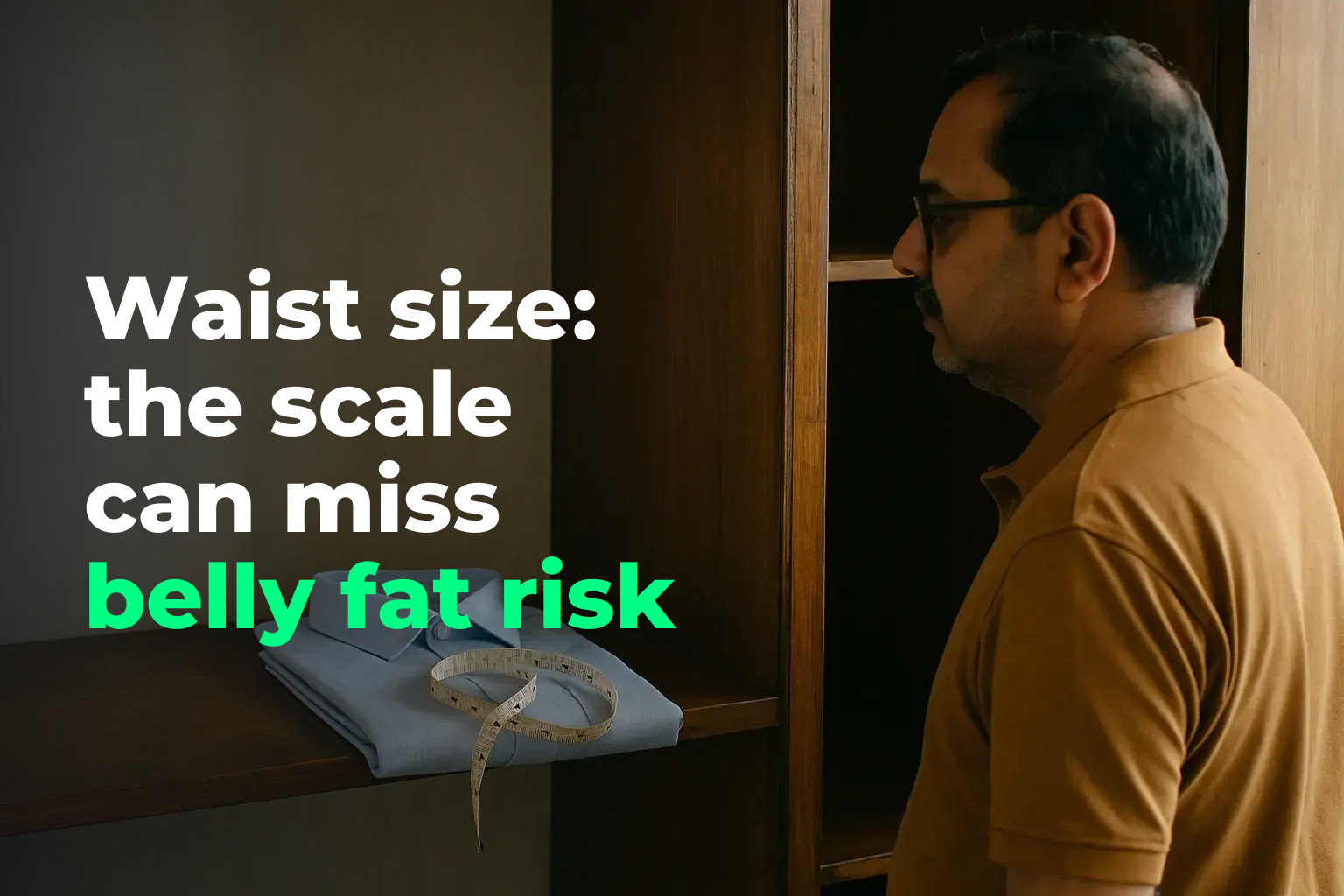
The most powerful lifestyle drivers of chronic inflammation are dietary quality, body fat distribution, and blood sugar control — and these three interact constantly. Visceral fat, the metabolically active fat stored around your abdominal organs rather than under the skin, is not passive tissue. It actively secretes inflammatory signalling molecules including IL-6 and TNF-α. This is why waist circumference often predicts cardiovascular and metabolic risk more accurately than body weight alone — and why the Asian-specific metabolic vulnerability at lower BMI is clinically relevant in this population. You can have a “normal” BMI and still carry enough visceral fat to sustain elevated inflammation markers.
Chronically elevated blood sugar — even in the pre-diabetic range — produces a process called glycation, where glucose molecules attach to proteins and trigger further inflammatory signalling. The inflammation and the metabolic dysfunction reinforce each other in a loop that, once established, is harder to interrupt than it is to prevent.
Cellular Senescence — When Old Damaged Cells Refuse to Die and Keep Releasing Alarm Signals
One of the more striking mechanisms in ageing biology involves what happens to cells that have sustained enough damage to stop dividing but have not been cleared by the body’s normal clean-up processes. These senescent cells — sometimes called “zombie cells” in the popular science literature — do not simply go quiet. They release a steady stream of inflammatory signals known as the senescence-associated secretory phenotype (SASP). In plain terms: damaged cells that should have been eliminated instead keep broadcasting alarm signals that perpetuate inflammation in the surrounding tissue.
This is one of the mechanisms by which inflammaging compounds over time. As you accumulate more senescent cells with age, their collective SASP output contributes to the background inflammatory state — which in turn promotes more cellular damage, creating more senescent cells. Understanding this loop explains why inflammation tends to worsen with age even in people without obvious metabolic risk factors.
Sleep, Stress, and the Perpetual Alarm State
Chronic psychological stress activates the same inflammatory pathways as physical injury. The hypothalamic-pituitary-adrenal (HPA) axis — your body’s central stress-response system — when activated persistently, keeps cortisol elevated and immune signalling in a state of readiness that eventually becomes pathological. The evidence here is unusually concrete: documented cases of individuals reducing inflammatory markers measurably after removing sustained stressors from their lives illustrate that these signals are not fixed biological facts. They respond to conditions.
Sleep deprivation compounds this. Even modest, consistent sleep restriction — less than six hours — is associated with elevated hs-CRP and IL-6 levels. The relationship between sleep quality and inflammation is not correlational curiosity. It is a mechanism: poor sleep impairs the hormonal and cellular repair processes that normally damp down the alarm signal overnight.
What You Can Actually Do To Move the Markers
Dietary Fibre and Its Measurable Effect on hs-CRP
Among the dietary interventions with the clearest evidence behind them, fibre stands out for its specificity. Dietary fibre intake is associated with decreased levels of chronic inflammation markers, which are implicated in metabolic pathways related to ageing. The mechanism runs through the gut microbiome: fermentable fibre feeds beneficial bacterial strains that produce short-chain fatty acids, which in turn reduce intestinal permeability and lower systemic inflammatory tone. This is not about eating more vegetables in the abstract — it is a measurable biological effect on a measurable biomarker.
In practical terms, this means whole grains, legumes, and vegetables with sufficient fibre density — not fibre supplements added to an otherwise inflammatory diet. The food matrix matters for how the fibre is processed and fermented.
Vitamin D — The Immune Modulator Most Singaporeans Are Low In
This is counterintuitive for anyone living near the equator, but consistently documented: despite abundant sunshine, Vitamin D insufficiency is common across Singapore and Southeast Asia, partly because sun avoidance behaviour is widespread and partly because skin pigmentation affects synthesis efficiency. Vitamin D modulates immune responses and lowers inflammatory markers — and its role in inflammation regulation is now considered a core part of its biological function, not a secondary effect. If your Vitamin D level (measured as 25-hydroxyvitamin D in a blood test) is below 30 ng/mL, the case for supplementation is strong and well-supported.
Exercise, Body Composition, and Visceral Fat Reduction
Resistance training and aerobic exercise both reduce visceral fat and lower inflammation markers — but the mechanism differs slightly. Aerobic exercise acutely raises IL-6 during the session (a temporary, beneficial signal that promotes muscle adaptation) while reducing chronically elevated IL-6 over time. Resistance training primarily works through improving insulin sensitivity and reducing visceral fat stores, which are themselves major sources of inflammatory output. The two modalities are complementary, and the evidence does not support one over the other for inflammation specifically — it supports doing both consistently.
The challenge is that this is exactly the kind of nuanced question — how much, what type, and for whom — that a routine annual check-up was not designed to answer. Not because doctors do not care, but because population-level guidance was never built to account for your specific inflammatory profile, family history, and metabolic starting point. Getting from the general evidence to a personalised protocol requires looking at your actual numbers.
How to Get Tested — What to Ask For and How to Interpret the Results
The Tests Worth Requesting Beyond the Standard Panel
The standard Singapore health screen — including the Screen for Life programme — measures cholesterol fractions, fasting glucose, and blood pressure. It does not include hs-CRP, IL-6, TNF-α, or fibrinogen. These require a specific request, and in most cases, a private lab order. hs-CRP is the most accessible starting point: it costs under SGD 30 at most private labs, requires no fasting, and is the marker with the most established preventive evidence base. IL-6 and fibrinogen are worth adding if your hs-CRP is elevated or your risk profile is complex.
Biological age assessments that include inflammation panels — tracking hs-CRP alongside telomere-related and metabolic markers — are increasingly available through longevity-focused clinics and are worth considering if you want a fuller picture rather than a single number in isolation.
Understanding Your Numbers in the Context of Your Risk Profile
Interpreting hs-CRP follows a general framework: below 1.0 mg/L is considered low cardiovascular inflammatory risk; 1.0 to 3.0 mg/L is intermediate; above 3.0 mg/L is elevated. But these thresholds were established in largely Western populations, and the Asian-specific context — where metabolic risk often appears at lower BMI thresholds — means the intermediate range may carry more weight for someone with your family history than a population-average interpretation would suggest. A result of 1.8 mg/L that a doctor reads as “normal” might warrant a more active response if you have a first-degree relative who had a cardiac event before 60.
False elevations are also real. CRP requires careful clinical interpretation because it can be transiently elevated by recent infection, injury, or intense exercise — meaning a single measurement taken after you had a cold two weeks ago tells you less than a baseline measurement taken when you are well and rested. Repeat testing matters. A trend is more informative than a point in time.
Apply this mechanism insight to a decision you are already making this week: if you have had a standard blood panel recently, check whether hs-CRP was included. If it was not — and it almost certainly was not, because it is not part of Singapore’s standard health screening panel — that is the single most useful gap to close. At your next GP or specialist visit, ask specifically for an hs-CRP test. It costs under SGD 30 at most private labs, requires no fasting, and gives you a baseline number to track. A result above 1.0 mg/L warrants a conversation about root causes. That conversation is the starting point for everything else in this topic.